vineri 19 decembrie
Login Abonează-te
DeFapt.ro

Etichetă: românia

774 articole
Internațional

Copiii din România traficați pentru sex

Copiii din România, traficați pentru sex în Marea Britanie - aceasta este concluzia unui amplu reportaj BBC. O investigație a postului britanic de televiziune dezvăluie, după doi ani de documentare, cum sunt ademeniți copii din România să intre în industria sexului și cum unii dintre ei ajung în Marea Britanie, traficați pentru sex, relatează Digi24. Odată ajunși în Marea Britanie, copiii sunt ținuți captivi și obligați să ofere servicii sexuale, potrivit materialului BBC. Jurnalista BBC Jean Mackenzie a petrecut doi ani călătorind între România și Marea Britanie și dezvăluie de ce această industrie înflorește, după ce a cunocut fete care sunt vândute și cumpărate. Citește și: EXCLUSIV Avionul donat de Țiriac pentru SMURD, folosit de Gabriel Oprea pentru „zboruri speciale” Reportajul prezintă în deschidere o operațiune a poliției la o casă din Birmingham, Anglia, unde găsesc patru fete din România, îmbrăcate doar în lenjerie. Poliția suspectează că fetele au fost traficate în Marea Britanie și obligate să se prostitueze. Copiii din România sunt traficați pentru sex Fetele sunt duse într-un loc sigur și li se oferă asistență, însă pentru că ele nu recunosc că au fost traficate, iar prostituția este legală în Marea Britanie, fetele sunt duse înapoi în casa de unde au fost ridicate, despre care polițiștii spun că funcționează ca bordel. Citește și: Care sunt afacerile Chinei în România Jean Mackenzie a călătorit în România pentru a afla de ce atât de multe fete cad victime ale traficului și de ce se feresc atât de tare să accepte să fie ajutate. Ea a mers la un adăpost de copii, unde au ajuns fete care fuseseră ademenite spre prostituție de traficanți prin metoda „lover-boy”. Iana Matei, președinta Fundației Reaching Out Romania, i-a explicat jurnalistei cum funcționează această metodă și a dat exemplul unei adolescente de 13 ani care „încearcă cu disperare” să ajungă înapoi la cel care a ademenit-o prin această metodă, un „lover-boy” de 52 de ani. Copilele, unele dintre ele ademenite încă de la vârsta de 10 ani, sunt „educate” de traficanți să nu aibă încredere în poliție.

Copiii din România traficați pentru sex. (sursă: Pexels.com)
România este codașă la combaterea corupției. (sursă: Pexels.com)
Eveniment

România este codașă la combaterea corupției

România este codașă la combaterea corupției, potrivit ultimului raport al organizației Transparency International. Marea majoritate a statelor lumii nu au înregistrat progrese semnificative în ce priveşte reducerea corupţiei în ultimii 10 ani, relevă Indicele de Percepţie a Corupţiei (IPC) 2021 lansat marţi de Transparency International (TI), care semnalează, în paralel, o intensificare a abuzurilor împotriva drepturilor omului şi un declin al democraţiei, potrivit unui comunicat de presă al acestei organizaţii.IPC reflectă modul în care experţi independenţi şi din mediul de afaceri percep corupţia existentă în sectorul public din 180 de state şi teritorii. Clasamentul este întocmit prin acordarea de puncte, de la 0 la 100, în care 0 înseamnă "foarte corupt", iar 100 "deloc corupt".Potrivit TI, 86% dintre ţările analizate nu au înregistrat progrese semnificative sau chiar au regresat în ultimii 10 ani. Citește și: EXCLUSIV Avionul donat de Țiriac pentru SMURD, folosit de Gabriel Oprea pentru „zboruri speciale”Media globală a IPC rămâne neschimbată, la 43 de puncte, pentru al zecelea an consecutiv, iar două treimi din ţări au punctaje sub 50 din 100.Cu doar 45 de puncte, România rămâne în rândul celor trei ţări din Uniunea Europeană percepute drept cele mai corupte, alături de Ungaria (43 de puncte) şi Bulgaria (42 de puncte). Percepţia asupra corupţiei din sistemul public este similară nu doar de la un an la altul, ci şi prin comparaţie cu rezultatele din anul 2012, când România avea 44 de puncte. România este codașă la combaterea corupției Media la nivelul statelor UE rămâne la 64 de puncte. Ţările aflate în topul IPC sunt Danemarca (88 puncte), Finlanda (88 puncte) şi Noua Zeelandă (88 puncte), toate trei fiind şi în top 10 mondial privind libertăţile civile, conform Democracy Index.Somalia (13 puncte), Siria (13 puncte) şi Sudanul de Sud (11 puncte) rămân la coada clasamentului IPC. Siria este de asemenea clasată pe ultimul loc în clasamentul privind libertăţile civile. Citește și: Care sunt afacerile Chinei în RomâniaPe de altă parte, 27 de ţări, printre care Cipru (53), Liban (24) şi Honduras (23) au atins minime istorice în acest an.În ultimul deceniu, 154 de ţări au regresat ori nu au făcut progrese semnificative. Din 2012, 23 de ţări au scăzut considerabil în IPC - inclusiv ţări dezvoltate economic precum Australia (73), Canada (74) şi Statele Unite ale Americii (67). Pentru prima dată, SUA nu mai face parte din top 25 al IPC.În schimb, 25 de ţări şi-au îmbunătăţit considerabil scorurile, inclusiv Estonia (74), Seychelles (70) şi Armenia (49).Transparency International a constatat că statele care încalcă libertăţile civile în mod constant au scoruri mai mici în IPC. O atitudine de complacere în lupta împotriva corupţiei agravează încălcarea drepturilor omului şi subminează democraţia, declanşând un întreg cerc vicios. Pe măsură ce aceste drepturi şi libertăţi se erodează şi democraţia se află în declin, autoritarismul îi ia locul, contribuind la atingerea unor niveluri şi mai mari de corupţie, arată organizaţia."Drepturile omului nu sunt doar 'un principiu pe care este bine să îl ai' în lupta împotriva corupţiei. Abordările autoritare distrug sistemul independent de control şi echilibru şi fac eforturile anticorupţie să depindă de capriciile unei elite. Singura cale durabilă către o societate fără corupţie este să te asigurări că oamenii pot vorbi liber şi că pot lucra împreună pentru a face puterea să fie răspunzătoare", a declarat Delia Ferreira Rubio, preşedintele Transparency International. Drepturile omului sunt amenințate Pe măsură ce eforturile de combatere a corupţiei stagnează şi se deteriorează, drepturile omului şi democraţia sunt atacate. Folosirea continuă de către guverne a pandemiei de COVID-19 pentru erodarea drepturilor omului şi a democraţiei ar putea duce, de asemenea, la declinuri mai accentuate pe tot globul în viitor.Transparency International face apel la guverne să acţioneze în conformitate cu angajamentele privind anticorupţia şi drepturile omului. De asemenea, TI face apel la oamenii de pe tot globul să acţioneze împreună pentru a cere schimbarea."În contexte autoritare în care controlul asupra guvernului, afacerilor şi mass-media revine câtorva indivizi, mişcările sociale rămân ultimul control asupra puterii. Puterea deţinută de profesori, oameni de afaceri, studenţi şi oameni obişnuiţi din toate categoriile sociale este cea care va duce la responsabilizare", a declarat Daniel Eriksson, CEO al Transparency International.

Rusia ar putea transforma gazul într-o armă Foto: en.kremlin.ru
Internațional

Rusia ar putea transforma gazul într-o armă

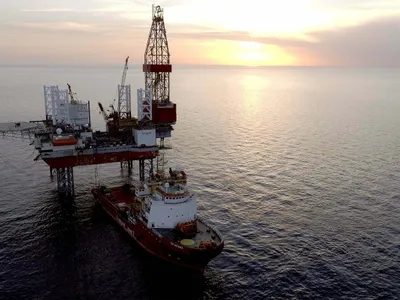
Rusia ar putea transforma gazul pe care-l exportă în vestul Europei într-o armă, se tem liderii politici din NATO. Dacă Putin va invada Ucraina, iar statele din NATO și UE vor impune Rusiei sancțiuni economice, Gazprom ar putea limita livrările de gaze. Prețurile la energie, deja la un nivel record, vor crește din nou. Rusia ar putea transforma gazul într-o armă Germania este una din țările cele mai dependente de importurile de gaze din Rusia. Se estimează că în 2021 circa 50-75% din importurile de gaze proveneau din Rusia. În Germania, capacitatea de stocare a gazelor este cea mai mare din UE, dar Gazprom deține multe din aceste instalații. „Nord Stream 2, odată pus în funcțiune, ar crește dependența energetică a Germaniei de Rusia și ar permite Kremlinului să rupă coeziunea economică a Europei”, a explicat Constanze Stelzenmüller, expert în securitate europeană, într-o analiză pentru Brookins Institute. Cu toate acestea, liderii social-democrați din Germania, aflați la guvernare, se opun adoptării de sancțiuni care să vizeze Nord Stream 2. Wall Street Journal scrie că această situație se datorează deciziei Germaniei de a renunța atât la energia nucleară, din 20222, cât și la cea pe bază de cărbune, din 2030. Publicația explică faptul că vulnerabilitatea Germaniei limitează opțiunile Europei în criza din Ucraina. România, la mâna Gazprom În ceea ce privește România, importurile de la Gazprom au atins, în primele zece luni din 2021, suma de 700 de milioane de dolari, dublu față de anul trecut. Și prețurile au explodat, potrivit datelor ANRE: în octombrie 2020, România plătea 177 USD pentru mia de metri cubi de gaz rusesc august 2021, 214 USDseptembrie 2021, 324 USDoctombrie 2021, 612 USD pentru mia de metri cubi Până acum, România nu a reușit să extragă din rezervele deținute în Marea Neagră nici un metru cub de gaz. Citește și: Iohannis, nici un cuvânt despre criza facturilor, din octombrie SUA cere ajutor din Qatar pentru UE În aceste condiții, Statele Unite discută cu aliații din Golful Persic să crească livrările de gaze lichefiate către Europa. Preşedintele SUA, Joe Biden, urmează să poarte discuţii cu emirul Qatarului, şeicul Tamim bin Hamad al-Thani, la Washington în această lună. În acest moment, cea mai mare parte a gazelor lichefiate pe care le exportă Qatar-ul pleacă spre Asia. Însă, de exemplu, Germania nu are nici un terminal pentru importul de gaze lichefiate. Dacă Rusia închide robinetul gazelor spre Europa, administrația Biden nu va avea o contramăsură. Europa va resimți imediat efectul, prin creșterea prețului energiei și prin epuizarea stocurilor, în mijlocul iernii, scrie Reuters. În primele douăzeci de zile din ianuarie, UE a primit gaze din SUA de cinci ori mai mari decât livrările din Rusia, scrie tradingeconomics.com. În ultimele zile, intrările de gaze de la terminalele GNL din Europa au depășit 400 de milioane de metri cubi pe zi, de 2,5 ori mai mult decât media pentru mijlocul lunii ianuarie în ultimii cinci ani, arată anticorupție.md. Stocurile de GNL din rezervoarele europene de stocare sunt de asemenea destul de mari pentru mijlocul lui ianuarie. Ele sunt cu 41% mai mari decât anul trecut și cu 26% mai mari decât media pentru datele curente din ultimii cinci ani.

Vasile Dîncu încurajează tema RO EXIT (sursa: Facebook/Vasile Sebastian Dancu)
Politică

Dîncu încurajează tema RO EXIT

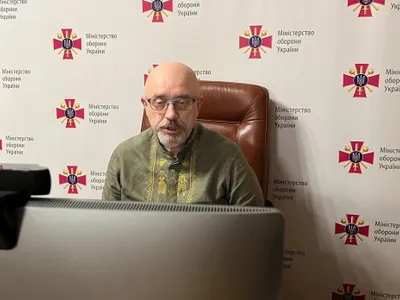
Dîncu încurajează tema RO EXIT și consideră că este necesară o dezbatere despre ieșirea României din UE. Argumentul ministrului Apărării dintr-un stat UE: „trebuie sa reincepem sa dezbatem idei, chiar dacă sunt aberante din punctul nostru de vedere”. Vasile Dîncu a devenit ministru al Apărării în guvernul Ionel Ciucă la finalul lui 2021. La 1 ianuarie 2022, România a aniversat 15 ani de prezență în Uniunea Europeană, ca membru cu puteri depline. Dîncu încurajează tema RO EXIT Însă, din punctul de vedere al lui Dîncu, lucrurile nu ar fi neapărat bune pentru România. Într-o postare pe Facebook, ministrul de azi al Apărării a spus că „trebuie sa reincepem sa dezbatem idei, chiar dacă sunt aberante din punctul nostru de vedere”. Ideea la care se referea Dîncu era aceea a ieșirii României din UE. Citește și: Care sunt afacerile Chinei în România Și mai ciudat pentru guvernul Ciucă, postarea lui Vasile Dîncu promova un interviu luat de Dan Cărbunaru, actualul purtător de cuvânt al Guvernului, lui James Mirrlees, economist care a luat premiul Nobel. Titlul interviului (care poate fi citit aici) este „EXCLUSIV. Sfatul pentru ROMÂNIA al unui laureat al premiului NOBEL pentru ECONOMIE: IEȘIȚI DIN UE”. Interviul este luat de Cărbunaru în mai 2013 iar Dîncu l-a menționat pe Facebook în martie 2020. Cărbunaru dă înapoi În subsolul postării, Dan Cărbunaru a comentat pe subiect: „e interesant cum se face o dezbatere pe baza unui interviu dupa atatia ani. punctul meu de vedere? Romaniei nu ii poate fi mai bine decat in NATO si UE.” Comentariile lui Dan Cărbunaru la postarea lui Vasile Dîncu (sursa: Facebook/Vasile Sebastian Dancu) Într-un schimb de replici cu sociologul Barbu Mateescu, Vasile Dîncu și-a argumentat punctul de vedere: „suntem in UE, am facut sacrificii pentru asta, dar nu avem un proiect si nu avem vocea noastra acolo, deci zero influenta. Mai rau este ca elita noastra nu este in stare sa gandeasca critic, sa caute solutii la neajunsuri. M-au enervat englezii cu Brexitul lor, dar ma gandesc ca inhibarea oricarei discutii despre ineficienta UE este mai grava. Dar, hai sa tacem! Sa bifurcam mereu temele pentru a lua in brate ramura care ne convine. Atat am avut de spus aici, tema e prea vasta!” Schimb de replici între Barbu Mateescu și Vasile Dîncu (sursa: Facebook/Vasile Sebastian Dancu) Nu este clar ce crede azi Vasile Dîncu, ministru al Apărării în România, stat al Uniunii Europene, despre temă. Dar știm că subiectul a fost acaparat de personaje precum Diana Șoșoacă, de exemplu, care insistă că ieșirea României din UE este necesară.

China Development Bank (source: chinadaily.com)
Investigații

China Development Bank in Romania

China Development Bank is a Chinese state-owned development bank established in 1994 and led by a cabinet minister at the Governor level, under the direct jurisdiction of the State Council. Since the beginning of the 2000s, China Development Bank has been interested in the Romanian banking market and has analyzed the possibility of opening a branch in Romania. especially since the Chinese bank prefers to grant long-term loans and especially for infrastructure projects. China Development Bank in Romania Then, in 2013, Romania's ambassador to Beijing at the time, Doru Costea, said the Chinese bank could open a branch in Bucharest. The idea of opening such a branch came from the need for Chinese investments in some important objectives for Romania. And here we refer to pending projects such as the Rovinari Thermal Power Plant, the Tarnița Hydroelectric Power Plant and the Craiova-Pitești Highway. Also read: No social-democrats in power, no success for China Other years of silence but good intentions followed. Only in 2019, a cooperation agreement was signed between China Development Bank and Eximbank Romania on credit guarantee. But nothing actually happened yet. Wind money However, a business with the Chinese bank's money was eventually developed. Goldwind International Limited, a division of Xinjian Goldwind Science & Technology Co., has installed 20 of its GW109/2500 turbines in the Mireasa wind farm, near Constanța. The final beneficiary was Mireasa Energies SRL, part of the Monsson Group, controlled by the Swedish businessman Emanuel Muntmark, one of the largest wind farm developers in Romania. For the 50 MW Mireasa 1 Wind Farm in Dobrogea, Monsson Alma contracted a € 43 million loan from China Development Bank in 2015. Monsson Alma has also developed the 600 MW Fântânele-Cogealac Wind Farm, but not with Chinese money.

The Chinese multinational BYD Co Ltd (source: byd.com)
Investigații

Chinese multinational BYD Co Ltd

BYD Auto Co. Ltd. is an automotive subsidiary of the Chinese multinational BYD Co Ltd, which is based in Xi'an, Shaanxi Province. It was founded in 2003, following the acquisition by the BYD Company of Tsinchuan Automobile Company. The Chinese multinational BYD Co Ltd The company produces automobiles, buses, electric bicycles, forklifts, rechargeable batteries and trucks. The Denza brand, a joint venture with Daimler AG, produces luxury electric cars. BYD Auto Company Ltd is the largest electric bus manufacturer in the world. Also read: No social-democrats in power, no success for China In 2016, it built a factory in the town of Komárom in north-western Hungary. BYD Co Ltd established in 2002 BYD Electronic (International) Company Limited, a subsidiary which produced handset components and assembled mobile phones for Nokia and Motorola, with production bases both inside and outside of China. There were three factories outside China: one in Cluj, Romania; a Komárom, Hungary, production base, that was open following the February 2008 purchase of Mirae Hungary Industrial Manufacturer Ltd; and a Chennai, India, base. Hungary and Romania In addition, BYD Electronic has production bases in Huizhou, Tianjin, and at Baolong Industrial Park, Longgang District, Shenzhen. The factory in Hungary has been closed and today the factory is producing electric buses instead of handset components. As for the factory in Romania, it was closed in 2009. BYD Electronics Romania was to invest € 60 million at Nokia Village, near Cluj and to hire, in the first instance, 500 people. Basically, the construction of the factory was not even completed. However, the Chinese electric car manufacturer BYD has also officially entered the Romanian market through the Israeli importer New Kopel Car Import, part of SIXT Group Romania.

No way for Huawei in Romania (source: huawei.com)
Investigații

No way for Huawei in Romania

No way for Huawei in Romania? The Chinese group Huawei operates in Romania through Huawei Technologies SRL, a company entirely owned by Huawei Technologies Cooperatief UA from the Netherlands. The company’s annual revenue increased during the last three years, according to data from the Ministry of Finances. 2016: RON 1.27 billion (over EUR 280 million) with a profit exceeding RON 36 million, approximately EUR 8 million. 2017: RON 1.4 billion (over EUR 310 million) with a profit exceeding RON 20 million, approx. EUR 4.5 million. 2018: RON 1.9 billion (over EUR 420 million) with a profit exceeding RON 36 million, approx. EUR 8 million. The Chinese therefore increased their revenues by 50% in two years. Paradoxically (or maybe not), this lead also to a drop in the number of employees: from 1,447 in 2016 to only 1,018 in 2018. The profit was in the margin under EUR 10 million every year during the last three years. No way for Huawei in Romania But the success of the company seems threatened by trans-Atlantic strategic movements that didn’t seem predictable with the take-over of the Prime-Minister Chair by Victor Ponta (PSD) back in 2012. In 2013, for example, the Minister of Communications from that time, Dan Nica, was signing a “Memorandum of Agreement” with Huawei through which the two entities “agreed to enter a strategic cooperation relationship”. Also read: No social-democrats in power, no success for China In the same year 2013, the Ministry of Communications was organizing a tender for the RO-NET project development, for building a high-speed internet network in 783 poor rural localities in Romania. The tender, financed by the European Union, amounting to RON 380 million (over EUR 85 million) was won in 2014 by Telekom, supported by Huawei (as equipment provider). After more than five years, in October 2019, only two of the seven project lots have been performed, according to a notice of the Ministry of Communications. Proxies all the time But Huawei Technologies SRL never attends a public tender as equipment provider on its own. Also, there is no won tender in the public procurement portal of Romania. But the Chinese equipment still reach the public institutions. Through other providers, as shown by a contract concluded by the Permanent Electoral Authority at the end of 2019 for the pieces of equipment necessary for the elections from 2019 – 2020. As information obtained by Hotnews show, “we are talking about Huawei equipment in regards to the hardware procurement equipment necessary to implement the computer system for centralizing the elections results and the computer system for monitoring the presence to vote in 2019”. HAINA is Romanian for "clothing" The Huawei offensive has another component in Romania: an educational one. In November 2018, the Technical University “Gh. Asachi” from Iași was announcing the launch of a training centre of the company called Huawei Authorized Information and Network Academy (HAINA). According to an article on the website of the Iasi Technical University, “Huawei donated, for the HAINA Training Center and the competition that started on Monday, November 5th, one of the laboratories of the Faculty of Automatics and Computers with an investment exceeding USD 50,000. The professors from the faculty were trained free of charge by the Huawei team to be able to perform the respective courses, and the representatives of the company visited the laboratory afterwards to see where the students will work”. The current objective for the Chinese company is the 5G network from Romania. Currently, the tender for attributing the 5G contracts is in stand-by. 5G, hard to get Huawei's name was invoked even by the president Klaus Iohannis in connection with this extremely important project. Asked by Europa Liberă (in December 2019) if he talked to PM Ludovic Orban about the Government adopting a Memorandum regarding the 5G network (agreed following a meeting at the White House between Iohannis and Donald Trump, in the summer of 2019), President Iohannis spoke his mind. He said (during an unofficial meeting with the journalists) that he told the Executive to wait regarding the tender and on adopting the 5G. „There is a single provider – Huawei, the others are relatively close, the ones from Europe and the United States. Let’s not get ahead of ourselves. Such tender will have such deep implications and the process is no longer reversible. If we have chosen a solution, it can no longer be reverted. Romania is going to develop this tender when ready”. So no way for Huawei in Romania. Huawei counter-attacked through advertising interviews in the economic media where it tried to empower the idea that the “exclusion of the Huawei equipment from the structure of the 5G network would generate additional EUR 2.6 billion costs for Romania, meaning nearly 1% of the PIB”, but without submitting clear arguments in this regard.

China Tobacco International Europe Company SRL (source: occrp.org)
Investigații

China Tobacco International Europe Company SRL

China Tobacco International Europe Company SRL (registered in Ilfov) is owned by companies registered in China. Which are as follows: China Tobacco Anhui Industrial Corporation (62%), Hongta Tobacco Group Co Ltd (Trust) (25,6%) and China Tobacco Shaanxi Industrial Co. Ltd. (12,3%). Big investment in China Tobacco International Europe Company SRL According to the company’s website, “China Tobacco International Europe Company, hereinafter referred as CTIEC is the only manufacturing plant of China National Tobacco cigarettes in Europe and so far the largest investment project in Romania owned by the Chinese government. In the CTIEC project of foundation from Romania, the Chinese government has invested a capital of about 40 million dollars, of which China National Tobacco holds 97.50% share”. Citește și: No social-democrats in power, no success for China The same source indicates ambitious plans for the Chinese cigarette factory in Romania. “Our Company takes Romania's neighbouring countries, the Middle East, the Balkan countries and North African markets as expanded focus and market base and explores new markets in all areas by drawing upon the experience gained from key points to achieve sequential development. These expansion areas are also gateways for exporting an increasing amount of goods to remote overseas markets in South Eastern and Central Asia, Western Europe, and Southern Africa.” The kings from Buzău Until October 2019, 0.76% of the shares of China Tobacco International Europe Company SRL were owned by Lemnking Industry Com SRL (Buzău). A company which withdrawn from the shareholding of the cigarette manufacturer after going bankrupt. In turn, Lemnking Industry Com SRL is owned by Shanghai F&J Investment and Management Co Ltd and three individuals. The Chinese nationals are connected, in one way or another, to the Chinese group F&J. At the beginning of 2012, Lemnking Industry Com SRL was mentioned by DNA prosecutors in a case very well-known at the time. It was about an extensive network of corruption in the port of Constanța (see details in the article dedicated to Lemnking). The network included a senator and the Secretary General of the Ministry of Interior of that time. The high-profile of the latter was the only thing that kept the Chinese-owned company from being noticed by the media. Furthermore, F&J, the Chinese group owning Lemnking Industry Com SRL, assumes parentship over China Tobacco International Europe Company SRL, as provided by the group’s website. “In 1997, China Tobacco Corporation, Shaanxi Tobacco Company and F&J EUROPE established the joint venture company in Romania. In 2005, the company increased the investment with three million US dollars, The HONGTA Group, China Tobacco Anhui Industrial Corporation joined as the new shareholders also.” Smaller and smaller profits After years of obtaining profit, the fiscal year 2019 was the first year of loss for China Tobacco International Europe Company SRL, as shown by the data of the Ministry of Finance. In year 2017, the company’s net profit was of 9.6 million lei (over 2 million euros), with revenue of almost 77 million lei (almost 17 million euros), with 166 employees. The following year, 2018, the net profit was half of the one gained the previous year – 4.8 million lei (little over 1 million euros), with revenue of 97,6 million lei (almost 22 million euros), with 179 employees. In 2019, the revenue was only 54,3 million lei (over 11 million euros), and the loss was of 7 million lei (1,5 million euros), with 175 employees. Also a relevant indicator, showing that things are not exactly going well for China Tobacco International Europe Company SRL, is debt. In 2017, the debt level was 68 million lei (almost 16 million euros). In 2018, it increased dramatically, to over 121 million lei (almost 27 million euros, with 5 million euros more than that year’s revenue). In 2019 it dropped to almost 97 million lei (20 million euros). Debt and smuggling for China Tobacco International Europe Company SRL Therefore, the company’s future is not bright: CTIEC began 2020 with a 1,5 million euros loss from the previous year, debt amounting to 20 million euros and forecasted revenue of only 11 million euros (if nothing changes compared to 2019). In the recent past, the company has also faced alleged smuggling operations scandals. According to Satu Mare (county located in the North-West of Romania, on the Ukrainian border) media reports, “the Dubliss brand belongs to China National Tobacco Corporation, through the company China Tobacco International Europe Company SRL, registered in Romania. The brand was launched in our country in 2008, being then sold in Russia, and Ukraine respectively. It has been a few years since Dubliss cigarettes with Romanian tax stamp became unavailable in markets in our country. (...) What is interesting is the fact that most (...) Dubliss cigarettes sold in markets in Satu Mare county have Ukrainian tax stamps, a clear indication of the country of origin of those cigarettes.”

Victor Ponta and Li Keqiang in Bucharest (source: gov.ro)
Investigații

Romania: no social-democrats in power, no success for China

The close relations with China were established during Romania’s communist period (1945 – 1989). As would be expected from an ideological point of view, the successor of the Romanian Communist Party, namely today’s Social Democratic Party, has been more sensible to the connection with the great Asian power than the politicians in Bucharest with other ideological orientations. Iliescu & Năstase The first wave of Chinese business came over the young Romanian capitalism in the '90, when Romania was led by Ion Iliescu, a former member of the Romanian Communist Party led by Nicolae Ceaușescu until his execution, in December 1989. During the Prime Minister mandate of the social democrat Adrian Năstase, he also benefited personally of the commercial advantages offered by China: a criminal file on Năstase’s name mentions that he bought impressive quantities of goods from China, with money without any legal justification, including a life-size ceramic horse. However, the next Prime Minister imposed by PSD, Victor Ponta, was the most active in promoting Chinese economic interests: he promised he would cede reactors 3 and 4 of the nuclear power plant in Cernavodă to Chinese state company, he concluded a memorandum through which Huawei would have participated in strategic public projects in the field of communications, and he generally promised he would fully open Romania’s economy to opportunities coming from Beijing. Ponta in China Visiting Beijing in 2013, at the invitation of his Chinese counterpart, Li Keqiang, Ponta requested the conclusion of a strategic partnership with China: “We proposed, during our meetings with the president and the prime minister, elevating the relationship between Romania and China to the highest level Romania has, namely that of Strategic partnership. There are a few countries we have strategic partnership with, and we would like – next year we will celebrate 65 years of diplomatic relations – to have a strategic partnership with China. Such a strategic partnership includes several fields, from political collaboration, to, obviously, economic collaboration, which is of great importance, but also in the fields of culture, education and others. (...) The president and the prime minister said they greatly appreciate this proposal, that they have a very good opinion on it, and that, obviously, we will enter the analyse procedure, a standard diplomatic procedure necessary for its completion”. This proposal caused uproar both in Bucharest and in western chancelleries, as Romania had a strategic partnership with the USA and was a NATO member. Dăncilă's advisers Another social-democrat prime minister who stimulated Romanian-Chinese economic relations was Viorica Dăncilă (2018 – 2019). Considered the puppet of the former PSD leader Liviu Dragnea, without any real political power, Dăncilă was advised and controlled by councillors very close to China. According to the media in Bucharest, one of them, Florea Voinea, had met the current Chinese Prime Minister Li Keqiang when they were both members of the Communist Youth (of Romania and China, respectively). In an interview with Radio România Internațional, the Chinese department, Voinea expressed his full admiration for China: “If you go and visit Shenzhen, with Huawei and ZTE, and see what they’ve done there… their nuclear power plant, how many groups operate there… They’ve built new cities, you wouldn’t believe there are such constructions on Earth (…) I am puzzled as to why we haven’t continued our collaboration with China, why we don’t collaborate with them and carry out projects with them. I confess that Zhang Gaoli said, 4-5 years ago, that for them it wouldn’t be a problem to support Romania’s development, that they can offer us loans even without government guarantees and that we can pay with anything. I confess I really can’t begin to comprehend how you could have such an offer and fail to capitalize it”. NATO, the game changer However, the relevant events occurring internationally in the second half of 2019 blocked the momentum gained by strategic Chinese business in Romania. After a meeting in Washington in August 2019, between Romanian president, Klaus Iohannis, and the American president, Donald Trump, the White House published a joint statement showing that the two countries “seek to avoid the security risks that accompany Chinese investment in 5G telecommunications networks”. Following the agreement concluded in Washington, a memorandum hindering the access of Huawei in the construction of the 5G network in Romania was signed. In December 2019, after a NATO summit in London, the final statement included a fragment highlighting an ambivalent relationship between the Alliance and China: “We recognise that China’s growing influence and international policies present both opportunities and challenges that we need to address together as an Alliance”. In November 2019, Ludovic Orban, president of the National Liberal Party, the same party that supported Klaus Iohannis in winning his second mandate as president, became Prime Minister. For Nicolae Vasilescu, President of the Romania-China Chamber of Commerce and Industry, these political moves were a disaster. “All strategic investments with China were stopped by the PNL government”, declared Vasilescu, for the project “The Chinese belt around the Black Sea”, referring to reactors 3 and 4 in Cernavoda, the Comarnic – Brașov highway and the auction for the 5G network. More propaganda, less money President of the Chamber of Commerce and Industry of Romania, Mihai Daraban, seems to confirm that, without the realization of these mammoth investments, Chinese influence on the Romanian economy is diminished. “I keep seeing, in the public space, a multitude of Chinese delegations coming to Romania. Every colleague of mine, from every county, has received tens if not hundreds of Chinese delegates over the years, but unfortunately, although we would have great expectations from them, China is under the one hundred million euros mark of direct investment in Romania. It is true, in the media they are very active, very present. Even our officials are sometimes travelling more frequently in China than in the United States, but this is reality, China has less than one hundred million (euros directly invested in Romania)”, said Daraban in October 2019. According to the revenues gained in the fiscal year 2018, the most important Chinese companies in Romania are: COFCO (3.9 billion lei - 900 million euros), Pirelli Tyres Romania (2.6 billion lei - 578 million euros), Huawei (1.9 billion lei - 420 million euros), Smithfield and the companies it owns (1.5 billion lei - 333 million euros), Eurosport DHS and the companies it owns (440 million lei - 100 million euros), NBHX Rolem (375 million lei - 83 million euros), COSCO (210 million lei - 47 million euros) and Honest General Trade (202 million lei - 45 million euros).

DeFapt.ro
Investigații jurnalistice, analize, știri la zi
Abonează-te
DeFapt.ro

Ultima oră

Ultima oră