vineri 05 decembrie
Login Abonează-te
DeFapt.ro

Etichetă: russia

5 articole
Investigații

The Uzbek route: how Moscow sent anti‑EU funds into Moldova via a Tashkent regime sponsored company

Vitalie Călugăreanu, Cătălin Prisacariu, Stanimir Vaglenov VERSIUNE ÎN LIMBA ROMÂNĂ A genuine politico‑financial war was waged, through intermediaries, against the Republic of Moldova in 2023 and 2024. The stakes were enormous: the country’s strategic orientation—situated between Ukraine and Romania—either towards the European Union or the Russian Federation. Thus, through Moscow’s primary proxy in Moldova, politician Ilan Şor, tens of millions of euros were transferred from Russia into Moldova to bribe voters. The targets: the referendum on Moldova’s EU integration and the presidential elections. After Ilan Şor’s party was outlawed in 2023 and banking channels for financial transfers from Russia were blocked by international sanctions, the Kremlin’s intermediaries sought other ways to funnel massive sums into Moldova in order to influence voters against the EU. Chişinău authorities launched major investigations into these cases and revealed how Şor and his associates flooded Moldova with Russian money. One method, previously unknown to the public and exclusively revealed in this article, involved the participation of a private company from a former Soviet republic — which is now an independent state with an autocratic leadership. The young entrepreneur Amiranashvili and his global digital solutions Almost 42 years old, Giorgi Amiranashvili lives the dream of a fulfilled Western life: he wholly owns and runs a successful digital company, has a beautiful family — an elegant wife and three almost-teenage children — and a comfortable lifestyle. He appears to be a 21st-century entrepreneur: his company, Global Solutions, provides web development/design services, as well as online payment services under the brand Global Pay Gate. Pictures on the company’s social media pages show young, cheerful employees in a relaxed work environment — dividing their time between screens, riding scooters around the company’s grounds, and relaxing on beanbags on lawn-like spaces. Occasionally, there are social media posts of birthday celebrations with pizza, huge colourful balloons, cake candles, and Halloween parties complete with costumes. Basically, Amiranashvili could have founded the company anywhere in today’s free world—with only an internet connection needed to run such a business. A Georgian in Tashkent and his million‑euro start‑up But Giorgi Amiranashvili is not a resident of the free world, at least not according to Freedom House, which rates the country he lives in as “not free,” scoring just 12 out of 100. It describes it as “an authoritarian state with few signs of democratization. No opposition parties operate legally. The legislature and judiciary effectively serve as instruments of the executive branch, which initiates reforms by decree, and the media are still tightly controlled by the authorities.” The country is Uzbekistan, and Amiranashvili is Georgian, born in Tbilisi in October 1983, but has lived in Tashkent for 25 years. In Uzbekistan’s capital, Amiranashvili integrated remarkably, especially in business. In May 2011, before he turned 28, he founded Global Solutions with a capital of almost one million euros—funds of unknown origin. The autocracy’s favoured company Almost immediately, he won a contract from state-owned Uztelecom to develop Tcity, Uzbekistan’s first mobile app for a city guide in Tashkent, as evidenced by a thank‑you letter in 2012. This was just the first of many public contracts. In subsequent years, Global Solutions created the mobile app for the national airline Uzbekistan Havo Yullari (UzAirways), then developed the MyGov public services portal app, the Central Electoral Commission’s app, a school app “E‑Darslik,” and the Central Bank’s mobile app. The Cabinet of Ministers and the Ministry of Information Technologies also publicly thanked the company for multiple digital modules and apps. Thus, since its inception, Global Solutions — founded by Georgian Giorgi Amiranashvili in Tashkent — has functioned as a digital arm of the Uzbek state, trusted implicitly by the autocratic regime. Money for Moldovans from anonymous benefactors In 2023, Global Solutions launched the Global Pay digital payment service, accessible via the Telegram messaging app — a platform widely used across the ex‑Soviet space but also ethically and legally controversial, as highlighted by an investigation in France into Telegram’s founder, Pavel Durov. Less than a year later, in early 2024, this Global Pay service was used to transfer funds from Russia to the Republic of Moldova. According to Moldovan authorities financial documents that our team of journalists was able to get access to, nearly one thousand P2P (person to person) transfers were made in the first four months of 2024 into Moldovan card accounts via Global Pay from Uzbekistan. The recipients — and amounts — were known to authorities, credited to accounts in Moldindconbank, Victoriabank, Energbank, OTP Bank, MAIB, and FinComBank. The names of the payers, however, have not been identified as they were hidden by the Global Pay payment app in Uzbekistan, financial documents seen by our team of journalists show. The money from Uzbekistan and the Guțul scheme According to the same documents, most of the Moldovan citizens who received money from anonymous benefactors in Uzbekistan are domiciled in Gagauzia, a Russian-speaking autonomous region of the Republic of Moldova. The beneficiaries of the money received through Global Pay in Gagauzia were mostly pensioners and civil servants. Exactly the same categories of Gagauz were the target of a Russian money-financing operation that took place exactly at the same time as the Global Pay payments were being made from Uzbekistan. Thus, on 9 April 2024, Evghenia Guțul, the leader of the Gagauz region, signed an agreement in Moscow with the Russian bank Промсвязьбанк (Promsviazbank - editor's note), so that Gagauz pensioners and state employees in Gagauzia would receive money from the Russian Federation on МИР (MIR - editor's note) cards on a monthly basis. In fact, the Russian bank, which is under international sanctions, was involved as an intermediary - the real sponsor being the organisation ‘Evrazia’ (also under international sanctions), which had only one employee - a close associate of the fugitive oligarch Ilan Shor. Pensioners and state employees from Gagauzia filled in special applications with personal data in order to receive help from the ‘Evrazia’ organisation. A code and password were sent to the telephone number indicated in the application, with the help of which people logged into their accounts in Promsviazbank. Global Pay in Uzbekistan offers online payment solutions in partnership with payment systems Uzcard, Humo, Visa and Mastercard. On the other hand, the Humo payment system in Uzbekistan has partnerships with the Chinese payment system UnionPay. And UnionPay has close co-operation with the Russian MIR card scheme. Thus, according to financial documents of the Chisinau authorities consulted by our team of journalists, the Global Pay payment system in Uzbekistan can serve as a gateway for MIR card users to the global payment system, despite the international sanctions imposed on the Russian banking system. Partner of Global Pay, a bank in which the German state owns shares In the aforementioned documents, the Moldovan authorities also mention the name of Ipak Yuli Bank in Uzbekistan, through which Global Pay has sent payments to Gagauzia without identifying the names of the payers. Ipak Yuli Bank, incidentally, is the very bank with which Global Solutions (the company owned by Giorgi Amiranashvili which manages the Global Pay payment system) has its bank accounts, according to official information. Ipak Yuli Bank proudly lists on its own website the fact that DEG - Deutsche Investitions und Entwicklungsgesellschaft mbH - is among the bank's shareholders. This German financial vehicle is wholly owned by the German State through KfW (Kreditanstalt für Wiederaufbau). Ipak Yuli Bank did not respond to our team of journalists' FOIA requests about financial transfers via Globay Pay to Moldovan citizens in Gagauzia. DEG does not comment on ‘individual cases’ DEG's press office, however, sent a reply to our questions, but without commenting on Ipak Yuli bank/Global Pay transactions to Moldovan citizens. “Thanks for your interest in DEG. First of all we would like to provide some general information on our work as a Development Finance Institution. DEG’s development policy mandate is to finance and advise private enterprises investing in developing countries as key drivers of employment and income. To this end, DEG provides such enterprises with long-term financing on risk-based terms from its own funds. Long-term financing is often not available locally. DEG carefully reviews the business purpose of every enterprise and the involved parties before deciding on any investment. Reviewing all partners relevant to a transaction (e.g. customers and suppliers) is part of the due diligence as well. Mandatory requirements include, among others, to identify the ultimate beneficial owners (so-called “know-your-customer (KYC) check”). During the complete term of the contract, there are further checks with regards to compliance-relevant aspects done on a regular basis. DEG strictly complies with all laws, relevant requirements and necessary reporting obligations, including the prevention of money-laundering or fraud. DEG always takes comments and hints concerning its investments very seriously and follows them up carefully. In case of any hints of non-compliant activities of customers, DEG will take active, appropriate action, if necessary with the involvement of external expertise. In the case of proven misconduct or breaches of contractual regulations by a customer, further measures are taken, which may even include the termination of the business relationship.For reasons of confidentiality, we cannot comment on any business activities in individual cases.”, said DEG’s reply to our team of journalists’ FOIA request. Similar FOIA requests sent to KfW, the German government and Global Solutions received no response. Şor’s stake: 300,000 votes purchased During Moldova’s 2024 pro‑EU referendum and presidential elections, Russia and fugitive oligarch Ilan Şor (serving 15 years in prison, sheltered in Moscow) attempted to buy 300,000 votes—roughly 10% of the vote. The Moldovan police documented around one million financial transfers in Sept-Oct 2024 via PSB bank in Russia into 138,000 Moldovan accounts. The real number of vote-sellers could be far higher. Şor’s group began electoral fraud preparations early, collecting personal data under the pretext of issuing social store cards, then recruiting people into paid anti‑government protests. Fraud scheme tested in Gagauzia In May 2023, Şor’s network tested its fraud scheme in the gubernatorial race in Gagauzia, where Evghenia Guţul won. Investigations showed activists were paid ~15,000 lei each to influence 30 voters. An National Anti-Corruption Council probe followed. President Maia Sandu refused to confirm Guţul, and the EU sanctioned her as part of destabilising actions in Moldova. In March 2025, anti‑corruption prosecutors searched a deputy mayor of Orhei in a case of illegal campaign financing for the Gagauzia governor’s post. Guţul, Şor’s former party secretary (2019–2022), is accused of illegal financial ties to Russia and is under house arrest, facing possible seven-year jail term; she denies charges as politically motivated. The Kremlin condemned her detention. As governor, Guţul continued Şor’s scheme after Şor — sentenced for a USD 1 billion banking fraud — was refused extradition by Russia. The Promsviazbank–Evrazia scheme scaled up The Gagauzia money‑funnel scheme was replicated nationwide in Moldova’s largest vote‑buying campaign, revealed by Ziarul de Gardă’s award‑winning investigation “In Moscow’s Service” ahead of the 2024 elections. In 2023–2024, Russia and Şor’s network used all possible routes to channel money into Moldova. Initial methods included people arriving at the airport with thousands of Pyypl debit cards, and suitcases of money at land borders. When authorities confiscated those funds, Kremlin planners switched tactics—organising charter flights from Moldova to Moscow, using people as couriers who returned with up to €10,000 each. In April 2024, police seized more than 20 million Moldovan lei during airport raids. Electoral calculations suggested Kremlin and Şor aimed to buy 300,000 votes — confirmed by President Sandu after the first round. Tens of thousands fined for selling votes The Kremlin’s plan nearly succeeded, but Moldovan police seized over half the intended funds. So far, ~15,000 people have been fined, with another 6,000 due to be summoned within a week, and fines up to 37,000 lei (nearly €2,000). Several network coordinators are under criminal investigation; some have fled to Moscow. According to RISE Moldova, in 2024 Şor founded five companies in Moscow despite being under international sanctions—sometimes in partnership with Russian state banks—operating in Kyrgyzstan and the UAE to evade sanctions and still generate billions of rubles. Critical 2025 elections New parliamentary elections are scheduled for 28 September 2025—perhaps the most important in Moldova’s history. The outcome will decide whether Moldova joins the EU by 2030. President Maia Sandu has warned the country faces “Russian‑style challenges like never before.” Following Russia’s brutal interference in 2024, the Moldovan Parliament strengthened its laws: increasing fines for electoral corruption, risking party suspension or dissolution, and ordering crackdowns on clone parties. This investigation was developed with the support of Journalismfund Europe.
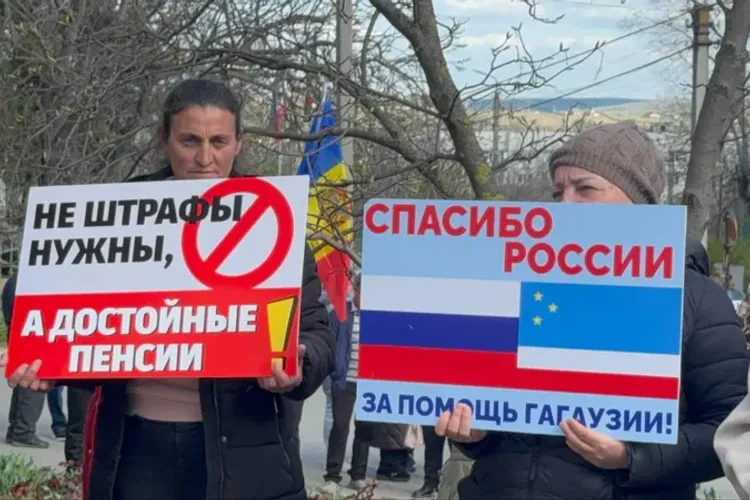
Residents of Gagauzia are thankful ro Russia for sending funds (source: Viorica Tataru)
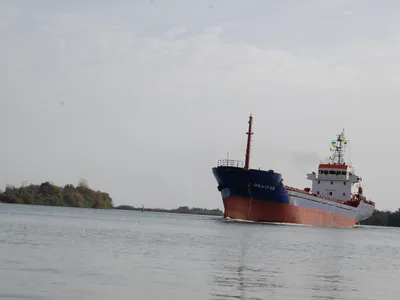
The Bystre Canal, open for business (sursa: Petru Zoltan)
Investigații

The Bystre Canal, open for business

Cătălin Prisacariu, Oleg Oganov, Petru Zoltan ROMANIAN version The Bystre Canal, open for business. Which is heavy maritime traffic, despite a pending dossier on the environmental impact on the Danube Delta. The UN committee considering environmental compliance has suspended discussions initiated by Romania on the dossier. The reason: the Russian invasion of Ukraine. The change on Chilia It's a cold November Saturday morning on the Romanian side of the Chilia Danube’s arm. Until the beginning of this year, only river vessels, mainly barges carrying goods between the Danube ports of Ukraine, could be seen on the waters of Chilia. But now the northernmost arm of the Danube is swarming with seagoing vessels. Across the water from the Romanian town of Pătlăgeanca, where the Danube forms the St. George's arm, six seagoing ships are stationed. A military speedboat carrying five soldiers is speeding towards them. From Pătlăgeanca to the Romanian town of Periprava, along Chilia, dozens of sea vessels and barges are silently floating, waiting to enter Ukraine's Danube ports. From time to time, Ukrainian military vessels approach and a few uniforms board for checks: since the Russian invasion, the Ukrainian bank of the Danube has been a militarised zone. Security checks To get from Periprava, the last Romanian village on the Chilia arm, to the point where the Bystre canal breaks away from the Danube, you need a local motor boat. There is also an unofficial procedure to tick before putting the boat in the water: you register, on the Romanian side, at the Romanian Border Police station to sail in Romanian waters. The reason: a precaution for a possible encounter with Ukrainian border guards on the Danube. If this happens, in order not to risk being considered a spy, you introduce yourself and recommend them to contact their Romanian colleagues where you have just registered as a tourist in your own country's waters. It's war, no risk worth taking. After 20 minutes of cutting through the water by motorboat, we arrive around 09.30 right at the spot where an enormous mouth opens into the Ukrainian shore. That's the point where the Bystre canal begins. The Bystre Canal, open for business The Tunisian-flagged cargo ship Iskander, which has just come out of the Bystre canal, passes by. Data from the Marine Traffic website, which was subsequently consulted, showed that the Iskander had left the Greek port of Vrisakia on 20 October 2023 for the Ukrainian port of Izmail, where it arrived on 4 November, the same day we saw it enter Chilia. A few minutes later, the Liberian-flagged oil tanker Panjali Teymurov enters Chilia from the Bystre canal. The tanker left the Bîstroe canal near the Romanian side of the Chilia river, then continued towards the Ukrainian town of Vâlcov, opposite Periprava. Periprava: 80 souls and roaming cows 80 souls, mostly Lipovans, are still residents of Periprava. They make their living from fishing, livestock farming and a little tourism. Dairy cows are allowed to graze unhindered on the pastures of the Danube Delta all year round, alongside the semi-wild horses of the Letea Forest. When the cows return home, the locals know that winter is coming. A former border policeman, now the local priest, is serving in the old Orthodox church, painted blue with golden spires. A few steps away there's the only shop in the village. Food and non-food products are sold here at a much higher price than in town: they are brought here by boat from Tulcea, almost 100 kilometres away. Between 12 noon and 5pm, the shop is closed, but villagers meet on the terrace in front of it. On one of the pillars of the building that houses the local shop there's a tin sign dating back to the communist regime that reads "Here they sell lucky tickets". Underneath the sign it's an iron table, painted green, with two locals sitting around it. Fishermen. What else? The two are Mihai Slatarov (43) and Dumitru Simionov (55), two of the youngest adults in the village. More fish, fewer windows of opportunity The two locals agree that the Ukrainians' deepening work on the Bystre canal has a good and a bad side. The good side is that more scabbard fish are coming up the Danube through the deepened canal. The bad part is that along with the fish come the sea-going vessels, which means they can't fish during the day. When the ships approach the Romanian side of the Danube, they cut the fishing nets of the locals, they say. They can only fish at night: the ships do not sail on the Danube at that time because of the war. "Bystre doesn't affect us at all. Since it started, there's more scabbard fish. You look on the app and you see that three ships are going up and four are coming down. They cut the nets. Last year they didn't let us fish in the evening, it affected us a lot," says Mihai Slatarov. "We protect the fish for Ukrainians" "This year they let us go fishing at night. We have to respect the EU regulations, we have a ban, it's forbidden to fish if the Danube drops below 50 cm. You look at the Ukrainians and see that they can fish and you sit and watch because you can't. They don't respect any rules. We protect the fish for them", Dumitru Simionov adds. Dumitru Simionov has been a fisherman since the communist regime. "Every cargo ship that comes on the Bystre comes to our shore and cuts our nets. It takes two or three days to order and get nets from Tulcea, during which time you can't fish but you have to make your quota. We're treated like dogs around here. The screw tightens and you're forced to leave Periprava. There used to be 27 fishing boats and now there are six, maybe seven.". Danube's routes to The Black Sea The Danube river is one of Europe's most important transport routes: not only does it cross ten countries, but it also connects to the Black Sea. Every year, more than 20 million tonnes of goods arrive by sea via the Danube, according to data published by the Danube Commission. The link between the Danube and the Black Sea is made by two routes: the Danube-Black Sea canal and the Sulina canal. The Danube-Black Sea canal was inaugurated in 1984, it is an artificial canal that took several decades to complete and is located on Romanian territory. Not deep enough Every year, more than ten million tonnes of international goods are transported through the canal. Another almost six million tonnes of goods transported on the canal are Romanian. The advantage of the Danube-Black Sea canal, compared to the Sulina canal, is that it makes the link between the Danube and the Black Sea at least 300 kilometres shorter. The disadvantage, however, is that it is only seven metres deep, which means that the maximum allowable draught for ships is only 5.5 metres. In other words, only inland waterway vessels and small seagoing vessels can sail the Danube-Black Sea canal. Sulina, essential for Ukrainian ports The Sulina Canal, on the other hand, is one of the three main natural arms of the Danube and crosses the Danube Delta on its way to the Black Sea. Sulina, however, was established in the second half of the 19th century as the only navigable channel of the Danube, by decision of all the states involved in the project within the European Commission of the Danube. The advantage of the Sulina canal, compared to the Danube-Black Sea canal, is that it allows a draught of seven metres. In other words, large seagoing vessels can navigate the Sulina. This is crucial for Ukrainian ports such as Reni and Ismail, which are located on the Danube's Chilia arm, north of the Sulina canal. The Chilia arm is also the natural border between Romania and Ukraine. In other words, Black Sea vessels bound for Ukraine can reach ports such as Reni or Ismail only by entering the Sulina canal and sailing upstream and enter the Danube, to Reni, or upstream on the Sulina to the confluence with the Chilia arm, then sailing downstream on this arm to Ismail. Bystre, the logical (water)way As one of the biggest problem that arose after Russia invaded Ukraine is that Odesa's ports can no longer be used, all Black Sea shipping traffic to Ukraine was taken over by the Romanian Sulina canal. The main effect - overcrowding: dozens of ships wait for days, even weeks to reach Reni or Ismail. So resuscitating the Bystre canal has become vital for Kyiv. Bystre is a natural branch of the Chilia arm, one of the three main branches of the Danube. Bystre, after breaking from the Chilia arm, flows 11 kilometres to the Black Sea. This branch has many natural advantages: it is a fast-flowing waterway, which means that the silt does not settle massively; it is up to 200 metres wide; it is not by islands and meanders. And, perhaps even more importantly, Bystre lies entirely on Ukrainian territory, which allows Kyiv to manage this waterway directly. 65 years later Ship traffic on Bystre is not a new idea. According to a report by the Scientific and Research Institute of Environmental Problems of Ukraine, "Navigation along the Chilia arm and the arms of the Chilia delta in the Danube region has been one of the main traditional activities since the middle of the 19th century. The seaports Izmail, Reni and Chilia, located on the Chilia arm, are 180, 160 and 120 years old respectively. The Bystre arm was used for shipping until 1958, after which it was kept for military use. From 1957 to 1994, the Prorva Channel was used for the passage of vessels with a draught of 3.5-4.0 m in the Ochakov and Chilia arms, which ceased to operate due to permanent sedimentation". The Espoo Convention Ten years later, however, in 2004, Ukraine resumed the project of activating the Bystre Canal as a waterway. This time, however, there was another variable in the equation, apart from the obvious logistical challenges: neighbouring Romania. According to the UN Espoo Convention (adopted in 1991 and entered into force in 1997), any State contemplating a major project with significant adverse transboundary environmental impacts is obliged not only to assess the environmental impacts of the project activities, but also to notify and consult with potentially affected States on the project. Although dozens of documents exchanged for almost 20 years between Romania, Ukraine and UNECE (UN Economic Commission for Europe, which monitors the compliance with the Espoo Convention in Europe) show, the Bystre case proved impossible to align with the Espoo Convention requirements. UN regulations, nothing without Ukrainian laws The main reason: the absence of Ukrainian domestic regulations transposing the Espoo Convention provisions into national legislation. In the absence of such legislation in force, the UNECE has pointed out on numerous occasions, the documents provided by Ukraine in the Bistroe case did not comply with the UN requirements and could not therefore be accepted. It was only in December 2020 that UNECE noted that "Ukraine has also adopted secondary legislation to bring its domestic regulations in line with the Espoo Convention". In the same document, however, the UNECE stated that it "expresses its deep concern that since 2008 only limited progress has been made by the Government of Ukraine in bringing the Bystre Canal project into full compliance with the Convention and that the roadmap has not been fully implemented". Furthermore, the UNECE stated that it "reiterates that the continuation of dredging activities constitutes a further violation of the Convention". Russia drowned the environmental concerns In March 2022, however, the Espoo Convention Implementation Committee, meeting in Geneva, decided to stop all activity in the Bystre case. "In view of the invasion of Ukraine by the Russian Federation, the Committee agreed to defer consideration of all compliance issues relating to Ukraine to its subsequent sessions," the meeting report said. What is the Bystre project? But the correspondence between Ukraine and Romania continued. The two sides have kept on arguing over environmental changes caused by works both at the mouth of the Bystre Canal into the Black Sea and on the Chilia arm (the Romanian-Ukrainian border), without reaching an agreement. What works are we talking about? According to a non-technical report sent to the Romanian authorities by the Ukrainian authorities, "Works are being carried out in the area of the branch of the Old Stambul and Bystre arms, as well as in the sea bar of the Bystre arm. (...) In the first phase, it is planned to reconstruct a 1,670 meters-long closure dam on the northern side of the sea access channel, to construct coastal rubbish pits and to build a flow-directing dam with bank fortifications on 11 km of navigation route. In the second phase, reconstruction of the fairway route with an increase in depth to 7.68 m for the passage of ships with the following parameters: length 125.0 m, width 17.0 m and draught 5.0 m and the construction of a closure weir on the southern side of the sea access channel with a length of 2,970 m. In the third phase, the fairway route is reconstructed with an increase in depth to 10.0 m to ensure the passage of ships with a draught of up to 7.2 m and the extension of the dams built in the first and second phases by 1,570 m, with access to the sea at a depth of >10.0 m). Disposal of dredged spoil is foreseen in the coastal spoil pits on the left bank of the Chilia arm and in the existing sea spoil pit, located more than 8 km from the coastline, east of the mouth of the Bystre arm". Ukraine points Romanian dredgings out Which and how much of these phases has been achieved so far is unclear. Most likely, as it is obvious from satellite imagery as well as images provided by the Ukrainian side, phase one has been fully completed. Are all these works on the Bystre, Old Stambul and Chilia dangerous for the environment? From the point of view of the UN Espoo Convention, the verdict has been indefinitely postponed because of the war in Ukraine. From Ukraine's point of view, there is no environmental danger. In the most recent official document sent by Kyiv in August 2023 in response to a set of comments and observations by Romania, it is stated that "The volume of dredging activities during the period of operation of the fairway is comparable to similar activities in the Danube delta, especially if dredging activities on the Romanian side are taken into account; the cumulative effect of these activities is relatively minor due to their separation in space and time and can be further reduced by inter-agency and cross-border coordination of these activities". Furthermore, according to the same document, "The fauna of the Danube Delta has historically adapted to the constant natural changes in its habitat, including seasonal changes in water content and hydrobiotic hydroclimatic parameters, so that the impact of the planned activities on it can be considered minimal." The Ukrainian Delta, militarized Also, "The planned activity will not result in additional types of anthropogenic impacts on protected area species and habitats, but the planned activity will increase the intensity of vessel traffic. At the same time, the impact of the planned activity on species and habitats in these areas can be considered as minimal", the document states. For the Administration of the Danube Delta Biosphere Reserve of the National Academy of Sciences of Ukraine, however, a local verdict is impossible to be delivered. According to a response from this institution to our request, "Since the first days of the war, access to the areas downstream of the town of Vylkove, including the mouth of the Bystre, has been strictly forbidden not only to locals, but also to the state security service, the administration and all employees of the reserve". The Ukrainian Danube Delta administration, however, also pointed out, despite the evidence: "At the same time, we know from reliable sources that no dredging has taken place at the mouth of the Bystre, and therefore we cannot talk about an impact, it is simply impossible.". The Romanian political mess So far, Romania has avoided a definitive assessment. All documents sent by Bucharest to Kyiv insist on compliance with the conditions required by the Espoo Convention and ask for a detailed environmental impact assessment. However, an episode that went off the diplomatic rails occurred in February 2023, when Romanian Transport Minister Sorin Grindeanu publicly stated that "there are signs that Ukraine is currently dredging the Bystre canal, which could have an impact on the environment and the Danube Delta". A flare-up by several politicians in Bucharest followed, then Grindeanu announced that measurements on Bystre and Chilia would be carried out jointly by Romanian and Ukrainian specialists. Despite the fact that the measurements have been carried out, Minister Grindeanu "forgot" to present the conclusions. To our request to present the joint measurements, the Ministry of Transport replied that "areas were identified where investment dredging works were carried out on the Bystre canal (...), which deepened the navigable channel (width 50 meters) from 5.85 meters (...) to 7-8 meters, a situation that was noted at the time of the measurements. The work carried out allows the navigation of seagoing vessels with a draught of between 6.3 and 6.5 metres. It should be noted that no areas have been identified where dredging works have been carried out on the Chilia arm". Moreover, "the Ministry of Transport and Infrastructure has addressed the Romanian Ministry of Foreign Affairs, requesting the view of the MFA regarding the Ukrainian side's compliance with the relevant conventions, treaties and agreements, as well as the measures to be taken", the institution's response reads. The hot potato, however, has been passed by the Romanian Ministry of Foreign Affairs back to the Ministry of Transport, as it appears from a reply of the Ministry of Foreign Affairs to our request: "In its reply to the Ministry of Transport request, the Ministry of Foreign Affairs indicated that the competent authorities to assess the impact of the works carried out by Ukraine on the Chilia arm and on the Bystre canal in relation to the bilateral and multilateral legal framework in force, including by interpreting the results of the technical measurements carried out, are the Ministry of Transport and the Ministry of Environment.". Further requests from us to the Ministry of Transport and the Ministry of Environment remained unanswered. The EU turns the blind eye For the Administration of the Danube Delta Biosphere Reserve of Romania, the impact of the works on the Bystre will be long-lasting. "In the long term, there will be effects caused by the deepening of the Bystre canal, as various deterioration processes occur, and changes over time may be surprising and difficult to predict at this time, with possible consequences such as a more acute shortage of water in certain adjacent areas," the institution says in a statement. In response to our request, the Romanian research institute GeoEcoMar pointed out the anthropic influence: "Opening another arm to maritime navigation (compared to the current one - Sulina - editor's note) will only produce anthropic pressures on a larger area of the delta, especially since the Sulina arm is part of the European TEN-T transport network and, under peaceful conditions, can serve the Danube ports of Romania, Moldova and Ukraine without problems. If the special international situation due to the war can justify this temporary expansion and intensification of traffic, otherwise the issue will have to be judged after the war is over.". According to a reply sent to our request, the European Commission indicated that it had not been asked for any consent from Ukraine for the works on the Bystre, that it had not financed this project and that the responsibility for the environmental impact assessment lies with the national authorities. _____________________________________ This article was developed with the support of Journalismfund Europe.
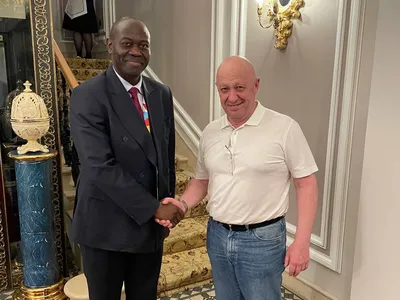
Prigojin, omul lui Putin în Africa (sursa: fontanka.ru)
Internațional

Prigojin, omul lui Putin în Africa

Prigojin, omul lui Putin în Africa. Liderul grupării ruse de mercenari Wagner, Evgheni Prigojin, a avut joi întâlniri cu lideri africani, în marja summitului Rusia-Africa ce se desfăşoară la Sankt Petersburg, relatează cotidianul online Fontanka.ru. Prigojin, omul lui Putin în Africa Prigojin, care a condus în urmă cu o lună o rebeliune armată eşuată împotriva conducerii militare ruse, nu a participat oficial la summit, iar respectivele întâlniri s-au desfăşurat într-un hotel unde sunt cazate delegaţiile ţărilor africane. Portalul sursă a informaţiei a publicat şi o fotografie de la Sankt Petersburg, în care Prigojin apare alături de un delegat african. Printre oficialii cu care liderul Wagner s-a întâlnit se numără reprezentanţi ai ţărilor unde această grupare este activă, precum Mali şi Republica Centrafricană, dar şi din statului Niger, unde este în desfăşurare o lovitură de stat militară ce l-a înlăturat de la putere pe preşedintele Mohamed Bazoum, aliat al Occidentului în regiunea Sahel. Lukașenko, bun la toate În virtutea unui acord mediat de preşedintele belarus Aleksandr Lukaşenko (potrivit versiunii oficiale) şi care a pus capăt revoltei armate a grupării Wagner din 23-24 iunie, Prigojin a acceptat să se stabilească în Belarus, în timp ce luptătorii Wagner au trebuit să aleagă între venirea împreună cu el în această ţară, intrarea în rândul trupelor regulate ale armatei ruse sau revenirea la casele lor. Deşi căzut în dizgraţie după marşul pornit asupra Moscovei, Prigojin a avut ulterior o întâlnire cu preşedintele Vladimir Putin la Kremlin. Citește și: Motivarea deciziei ICCJ prin care securiștii care l-ar fi ucis pe disidentul Gheorghe Ursu au fost achitați: elogiu adus ceaușismului și comunismului din anii ’80 După mai multe săptămâni de incertitudine, Ministerul belarus al Apărării a anunţat pe 14 iulie sosirea primelor coloane de combatanţi Wagner. Apoi, pe 19 iulie, Prigojin a publicat din Belarus o înregistrare video în care salută venirea luptătorilor săi, pe care i-a asigurat că se vor putea întoarce în Africa, unde gruparea Wagner are contracte, dar nu a exclus în viitor o revenire a lor pe frontul din Ucraina.

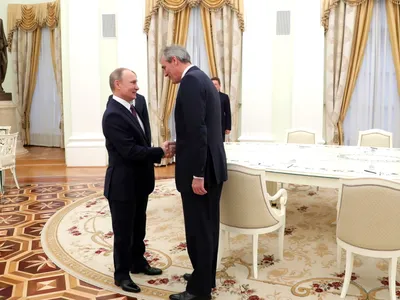
OMV n-a vrut să „bruscheze” Rusia Foto: Putin și șeful OMV, Rainer Seele, in 2017 Kremlin.ru
Eveniment

OMV n-a vrut să „bruscheze” Rusia

Publicația Der Standard, din Austria, scrie, într-o analiză publicată sâmbătă, că OMV n-a vrut să „bruscheze” Rusia, așa că a amânat exploatarea gazelor din offshore-ul românesc. Ziarul austriac arată și că, acum, pentru a demara exploatarea, ar fi nevoie de investiții de circa patru miliarde de euro. OMV n-a vrut să „bruscheze” Rusia „Rusia, ca furnizor de gaze al Austriei de mulți ani, nu ar trebui să fie bruscată, motiv pentru care OMV (…) nu a urmărit proiectul Neptun Deep cu graba necesară. Acest lucru este negat de partea austriacă”, a scris Der Standard. Ziarul amintește că anunțul privind descoperirea zăcământului a fost făcut în 2012, iar OMV a fost entuziasmat. „Ceva de genul acesta se întâmplă de obicei o singură dată în viața unui manager”, a spus atunci Gerhard Roiss, care a condus OMV din 2011 în 2015. Exploatarea a fost înghețată și pe fondul intervenției statului român, care, printre altele, dorea taxe mai mari. În plus, prețul gazelor scăzuse puternic. Însă, odată cu invadarea Ucrainei, prețurile la gaze au crescut, iar proiectul a rdevenit atractiv pentru OMV. „Pentru a extrage gazul ar trebui investite patru miliarde de euro, două miliarde doar de la OMV. Vechea lege offshore, care prevedea cea mai mare cotă de impozitare din UE, de 23 la sută, a fost între timp modificată de Parlamentul României și a devenit mai prietenoasă investitorilor. În unele puncte însă, se doresc încă îmbunătățiri, potrivit OMV. Primele gaze ar putea fi extrase în 2027, dacă (…) se va da undă verde pentru investiție în 2023”, mai arată Der Standard. Citește și: Japonia abandonează pacifismul și investește sute de miliarde de dolari în apărare, în fața amenințării Chinei comuniste Gazele din acest permietru, aflat la 170 de kilometri de Constanța, sunt la o adâncime de maxum 1.000 de metri.

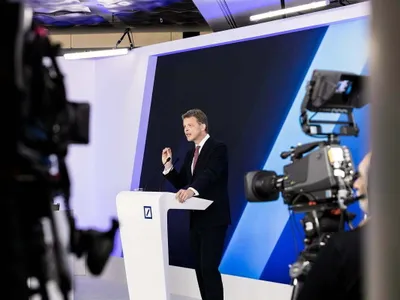
Deutsche Bank refuză să plece din Rusia, anunță directorul Christian Sewing Foto: Facebook Deutsche Bank
Internațional

Deutsche Bank refuză să plece din Rusia

Cea mai mare bancă din Germania, Deutsche Bank, refuză să plece din Rusia, apreciind că nu este „practic”, acum. Vorbind pentru CNBC, directorul financiar al băncii, James von Moltke, a susținut că această companie are o datorie față de clienții din Rusia. Deutsche Bank refuză să plece din Rusia Goldman Sachs și JPMorgan Chase au anunțat joi că își închid afacerile din Rusia, devenind primele bănci mari din SUA care au plecat din această țară, după invadarea Ucrainei de către Moscova, și punând astfel presiune asupra rivalilor, pentru ca aceștia să-i urmeze. "Suntem adesea întrebați de ce nu ne retragem complet din Rusia. Răspunsul este că acest lucru ar fi împotriva valorilor noastre", a explicat directorul general al DB, Christian Sewing, într-o notă adresată personalului. „Avem clienți care nu pot părăsi Rusia peste noapte”, a mai spus el. Fabio De Masi, un fost membru al Bundestagului și activist proeminent împotriva criminalității financiare, a spus, citat de US News, că Deutsche Bank are legături strânse cu elita rusă, unde mulți se confruntă cu sancțiuni externe, și că relațiile care au implicat și activități criminale ruse trebuie să se încheie. DB ar avea în Rusia o expunere, prin împrumuturile acordate, de 1,4 miliarde de euro, adică doar 0,3% din totalul împrumuturilor. Bonusuri de miliarde de euro Ca răspuns la criticile faţă de decizia sa de a rămâne în Rusia, DeutscheBank a dat publicităţii un comunicat în care anunţă că va respecta sancţiunile şi că „monitorizează îndeaproape situaţia”, adăugând că ar putea să îşi modifice abordarea „dacă va fi necesar”. Disputa legată de rămânerea în Rusia vine în aceeaşi zi în care Deutsche Bank a dezvăluit că recompensele plătite directorului general Christian Sewing au fost majorate cu 20% anul trecut, până la 8,8 milioane de euro. Citește și: Surse: Putin își decapitează serviciile secrete. Șeful unității care coordona campaniile de destabilizare a Ucrainei și lichidarea lui Zelenski, în arest la domiciliu În total, banca germană a plătit bonusuri în valoare de 2,1 miliarde de euro în 2021, cu 14% mai mult decât în 2020, pentru a-şi recompensa angajaţii pentru cel mai profitabil an pe care l-a avut Deutsche Bank în ultimul deceniu. Deutsche Bank i-a angajat fiica lui Pankin Deutsche Bank a fost investigată de Comisia pentru Bursă și Valori Mobiliare (SEC) a SUA după ce au fost identificate cinci cazuri de angajări ilegale ale unor rude de politicieni. Trei în China și două în Rusia. Unul dintre cazurile din Rusia l-a avut în centrul investigației pe Dmitri Pankin. Acesta conduce Banca pentru Comerț și Dezvoltare a Mării Negre. La care România deține 14% din acțiuni. Reprezentantul statului român în această bancă este liberalul Alin Chițu, secretar de stat în Ministerul de Finanțe. În anul 2009, atunci când era ministru adjunct al Finanțelor, Pankin i-a cerut directorului din Rusia al Deutsche Bank să-i angajeze fiica la unul dintre birourile băncii din Moscova, Londra sau New York. Anterior, Deutsche Bank „a încercat în mod repetat și fără succes” să facă afaceri cu Rusia. De această afacere răspundea Dmitri Pankin. Fiica oficialului rus a fost angajată temporar la Moscova, apoi a fost angajată definitiv la Londra. La câteva zile după obținerea postului permanent, Dmitri Pankin a cerut Deutsche Bank să trimită o propunere privind vânzarea de obligațiuni în valoare de 2,2 miliarde de dolari. Ulterior, oficialul rus și fiica acestuia, au plecat într-o vacanță de lux cu șefii băncii din Rusia, au fost la vânătoare, la pescuit și s-au plimbat cu elicopterul. Deutsche Bank a falsificat deconturile cu costurile vacanței, pe care le-a considerat legitime pentru a încheia tranzacția cu obligațiuni. Pentru a scăpa de investigația Comisiei pentru Bursă și Valori Mobiliarea a SUA, Deutsche Bank a acceptat să plătească 16,2 milioane de dolari. Astfel, Deutsche Bank a scăpat de acuzațiile de corupție.

DeFapt.ro
Investigații jurnalistice, analize, știri la zi
Abonează-te
DeFapt.ro

Ultima oră

Ultima oră