vineri 27 noiembrie
Login Contact
DeFapt.ro

românia

977 articole
Investigații

Smoking is not good for the financial health of China Tobacco

China Tobacco International Europe Company SRL (registered in Ilfov) is owned by companies registered in China. Which are as follows: China Tobacco Anhui Industrial Corporation (62%), Hongta Tobacco Group Co Ltd (Trust) (25,6%) and China Tobacco Shaanxi Industrial Co. Ltd. (12,3%). Big investment in China Tobacco International Europe Company SRL According to the company’s website, “China Tobacco International Europe Company, hereinafter referred as CTIEC is the only manufacturing plant of China National Tobacco cigarettes in Europe and so far the largest investment project in Romania owned by the Chinese government. In the CTIEC project of foundation from Romania, the Chinese government has invested a capital of about 40 million dollars, of which China National Tobacco holds 97.50% share”. Citește și: No social-democrats in power, no success for China The same source indicates ambitious plans for the Chinese cigarette factory in Romania. “Our Company takes Romania's neighbouring countries, the Middle East, the Balkan countries and North African markets as expanded focus and market base and explores new markets in all areas by drawing upon the experience gained from key points to achieve sequential development. These expansion areas are also gateways for exporting an increasing amount of goods to remote overseas markets in South Eastern and Central Asia, Western Europe, and Southern Africa.” The kings from Buzău Until October 2019, 0.76% of the shares of China Tobacco International Europe Company SRL were owned by Lemnking Industry Com SRL (Buzău). A company which withdrawn from the shareholding of the cigarette manufacturer after going bankrupt. In turn, Lemnking Industry Com SRL is owned by Shanghai F&J Investment and Management Co Ltd and three individuals. The Chinese nationals are connected, in one way or another, to the Chinese group F&J. At the beginning of 2012, Lemnking Industry Com SRL was mentioned by DNA prosecutors in a case very well-known at the time. It was about an extensive network of corruption in the port of Constanța (see details in the article dedicated to Lemnking). The network included a senator and the Secretary General of the Ministry of Interior of that time. The high-profile of the latter was the only thing that kept the Chinese-owned company from being noticed by the media. Furthermore, F&J, the Chinese group owning Lemnking Industry Com SRL, assumes parentship over China Tobacco International Europe Company SRL, as provided by the group’s website. “In 1997, China Tobacco Corporation, Shaanxi Tobacco Company and F&J EUROPE established the joint venture company in Romania. In 2005, the company increased the investment with three million US dollars, The HONGTA Group, China Tobacco Anhui Industrial Corporation joined as the new shareholders also.” Smaller and smaller profits After years of obtaining profit, the fiscal year 2019 was the first year of loss for China Tobacco International Europe Company SRL, as shown by the data of the Ministry of Finance. In year 2017, the company’s net profit was of 9.6 million lei (over 2 million euros), with revenue of almost 77 million lei (almost 17 million euros), with 166 employees. The following year, 2018, the net profit was half of the one gained the previous year – 4.8 million lei (little over 1 million euros), with revenue of 97,6 million lei (almost 22 million euros), with 179 employees. In 2019, the revenue was only 54,3 million lei (over 11 million euros), and the loss was of 7 million lei (1,5 million euros), with 175 employees. Also a relevant indicator, showing that things are not exactly going well for China Tobacco International Europe Company SRL, is debt. In 2017, the debt level was 68 million lei (almost 16 million euros). In 2018, it increased dramatically, to over 121 million lei (almost 27 million euros, with 5 million euros more than that year’s revenue). In 2019 it dropped to almost 97 million lei (20 million euros). Debt and smuggling for China Tobacco International Europe Company SRL Therefore, the company’s future is not bright: CTIEC began 2020 with a 1,5 million euros loss from the previous year, debt amounting to 20 million euros and forecasted revenue of only 11 million euros (if nothing changes compared to 2019). In the recent past, the company has also faced alleged smuggling operations scandals. According to Satu Mare (county located in the North-West of Romania, on the Ukrainian border) media reports, “the Dubliss brand belongs to China National Tobacco Corporation, through the company China Tobacco International Europe Company SRL, registered in Romania. The brand was launched in our country in 2008, being then sold in Russia, and Ukraine respectively. It has been a few years since Dubliss cigarettes with Romanian tax stamp became unavailable in markets in our country. (...) What is interesting is the fact that most (...) Dubliss cigarettes sold in markets in Satu Mare county have Ukrainian tax stamps, a clear indication of the country of origin of those cigarettes.”

Smoking is not good for the financial health of China Tobacco
Romania: no social-democrats in power, no success for China
Investigații

Romania: no social-democrats in power, no success for China

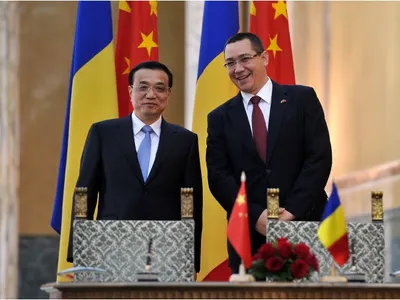
The close relations with China were established during Romania’s communist period (1945 – 1989). As would be expected from an ideological point of view, the successor of the Romanian Communist Party, namely today’s Social Democratic Party, has been more sensible to the connection with the great Asian power than the politicians in Bucharest with other ideological orientations. Iliescu & Năstase The first wave of Chinese business came over the young Romanian capitalism in the '90, when Romania was led by Ion Iliescu, a former member of the Romanian Communist Party led by Nicolae Ceaușescu until his execution, in December 1989. During the Prime Minister mandate of the social democrat Adrian Năstase, he also benefited personally of the commercial advantages offered by China: a criminal file on Năstase’s name mentions that he bought impressive quantities of goods from China, with money without any legal justification, including a life-size ceramic horse. However, the next Prime Minister imposed by PSD, Victor Ponta, was the most active in promoting Chinese economic interests: he promised he would cede reactors 3 and 4 of the nuclear power plant in Cernavodă to Chinese state company, he concluded a memorandum through which Huawei would have participated in strategic public projects in the field of communications, and he generally promised he would fully open Romania’s economy to opportunities coming from Beijing. Ponta in China Visiting Beijing in 2013, at the invitation of his Chinese counterpart, Li Keqiang, Ponta requested the conclusion of a strategic partnership with China: “We proposed, during our meetings with the president and the prime minister, elevating the relationship between Romania and China to the highest level Romania has, namely that of Strategic partnership. There are a few countries we have strategic partnership with, and we would like – next year we will celebrate 65 years of diplomatic relations – to have a strategic partnership with China. Such a strategic partnership includes several fields, from political collaboration, to, obviously, economic collaboration, which is of great importance, but also in the fields of culture, education and others. (...) The president and the prime minister said they greatly appreciate this proposal, that they have a very good opinion on it, and that, obviously, we will enter the analyse procedure, a standard diplomatic procedure necessary for its completion”. This proposal caused uproar both in Bucharest and in western chancelleries, as Romania had a strategic partnership with the USA and was a NATO member. Dăncilă's advisers Another social-democrat prime minister who stimulated Romanian-Chinese economic relations was Viorica Dăncilă (2018 – 2019). Considered the puppet of the former PSD leader Liviu Dragnea, without any real political power, Dăncilă was advised and controlled by councillors very close to China. According to the media in Bucharest, one of them, Florea Voinea, had met the current Chinese Prime Minister Li Keqiang when they were both members of the Communist Youth (of Romania and China, respectively). In an interview with Radio România Internațional, the Chinese department, Voinea expressed his full admiration for China: “If you go and visit Shenzhen, with Huawei and ZTE, and see what they’ve done there… their nuclear power plant, how many groups operate there… They’ve built new cities, you wouldn’t believe there are such constructions on Earth (…) I am puzzled as to why we haven’t continued our collaboration with China, why we don’t collaborate with them and carry out projects with them. I confess that Zhang Gaoli said, 4-5 years ago, that for them it wouldn’t be a problem to support Romania’s development, that they can offer us loans even without government guarantees and that we can pay with anything. I confess I really can’t begin to comprehend how you could have such an offer and fail to capitalize it”. NATO, the game changer However, the relevant events occurring internationally in the second half of 2019 blocked the momentum gained by strategic Chinese business in Romania. After a meeting in Washington in August 2019, between Romanian president, Klaus Iohannis, and the American president, Donald Trump, the White House published a joint statement showing that the two countries “seek to avoid the security risks that accompany Chinese investment in 5G telecommunications networks”. Following the agreement concluded in Washington, a memorandum hindering the access of Huawei in the construction of the 5G network in Romania was signed. In December 2019, after a NATO summit in London, the final statement included a fragment highlighting an ambivalent relationship between the Alliance and China: “We recognise that China’s growing influence and international policies present both opportunities and challenges that we need to address together as an Alliance”. In November 2019, Ludovic Orban, president of the National Liberal Party, the same party that supported Klaus Iohannis in winning his second mandate as president, became Prime Minister. For Nicolae Vasilescu, President of the Romania-China Chamber of Commerce and Industry, these political moves were a disaster. “All strategic investments with China were stopped by the PNL government”, declared Vasilescu, for the project “The Chinese belt around the Black Sea”, referring to reactors 3 and 4 in Cernavoda, the Comarnic – Brașov highway and the auction for the 5G network. More propaganda, less money President of the Chamber of Commerce and Industry of Romania, Mihai Daraban, seems to confirm that, without the realization of these mammoth investments, Chinese influence on the Romanian economy is diminished. “I keep seeing, in the public space, a multitude of Chinese delegations coming to Romania. Every colleague of mine, from every county, has received tens if not hundreds of Chinese delegates over the years, but unfortunately, although we would have great expectations from them, China is under the one hundred million euros mark of direct investment in Romania. It is true, in the media they are very active, very present. Even our officials are sometimes travelling more frequently in China than in the United States, but this is reality, China has less than one hundred million (euros directly invested in Romania)”, said Daraban in October 2019. According to the revenues gained in the fiscal year 2018, the most important Chinese companies in Romania are: COFCO (3.9 billion lei - 900 million euros), Pirelli Tyres Romania (2.6 billion lei - 578 million euros), Huawei (1.9 billion lei - 420 million euros), Smithfield and the companies it owns (1.5 billion lei - 333 million euros), Eurosport DHS and the companies it owns (440 million lei - 100 million euros), NBHX Rolem (375 million lei - 83 million euros), COSCO (210 million lei - 47 million euros) and Honest General Trade (202 million lei - 45 million euros).

DeFapt.ro
Investigații jurnalistice, analize, știri la zi
Abonează-te
DeFapt.ro

Ultima oră

Ultima oră