vineri 02 octombrie
Login Contact
DeFapt.ro

china

321 articole
Investigații

F&J, the story of a Chinese business ghost

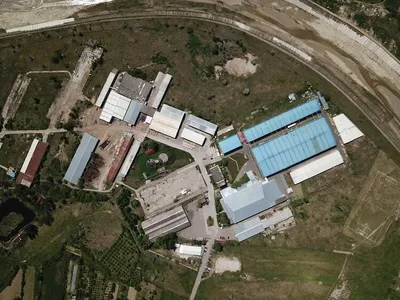
The Chinese group F&J has been present in Romania for over 20 years. AT least according to their own website: “F&J Europe, part of F&J Group, began operation on Romania market in the mid 90′s, forming one of the group’s strongest profit centres. Focused on the same businesses – timber, electronic products and household appliances, energy investments, construction and cigarettes producing, but also exploring new opportunities, F&J Europe soon becomes a solid production base and distribution centre.” The official presentation of the Chinese group F&J in Romania The previously quoted website mentions three Romanian companies owned by F&J: Lemnking Manufactory SRL (see the dedicated article), China Tobacco International Europe Company SRL (see the dedicated article) and F&J Europe Industry Park. Furthermore, the F&J official website, the .ro version, presents the activity of F&J Europe Industry Park: “F&J Europe China Enterprise Pack (ECEP) was set up since 2007 which is the year Romania join in EU. As a Comprehensive Chinese background service company, ECEP take the goal of help more and more Chinese company enter the EU market as our own duty, provide all-around services which are included from set up company to distribute production and accounting law support. ECEP is located in Parscov Buzau county Romania, near E60 road. ECEP has a surface of 320000 m2, 6500 m2 of professional warehouse, total investment 50 million EURO. Welcome to Romania! Welcome to ECEP! We will prepare everything well for you, we will be the strong support for your business in the EU!” F&J, just a cover name However, in official documents, things are very different. First of all, there is no company called “F&J Europe Industry Park” in Romania. And there never has been. The main commercial vehicle through which the Chinese operated in Romania was the Chinese company Shanghai F&J Investment and Management Co Ltd. This was responsible for establishing several companies in Buzău. Among them, Vortex International Group SRL in Pârscov, Buzău (initially named Vorton Lighting Industry SRL), F&J International SRL (Pârscov, Buzău), F&J European Investment Development SRL (Pârscov, Buzău), F&J Greenenergy Environment Development SRL (Pârscov, Buzău). None of them still exists. Vortex International Group SRL was deregistered in 2011, F&J European Investment Development SRL and F&J Greenenergy Environment Development SRL – in 2018, and F&J International SRL in 2019. The last three were deregistered after being legally dissolved: “requirements regarding the headquarters are no longer complied with, as a result of the expiration of the document attesting the right to use the location appointed as headquarters or the transfer of the right of use or property on the location appointed as headquarters, inclusively”. Therefore, the four companies established by Shanghai F&J Investment and Management Co Ltd – despite the fact that the Chinese are bragging about having an industrial park in Pârscov, Buzău – were left without headquarters and thus were legally dissolved. The ghost headquarters It is no coincidence that Lemnking Manufactory SRL and China Tobacco International Europe Company SRL are no longer connected to any of the deregistered SRLs, the shares belonging to the two companies being transferred to certain active companies. In these circumstances, it is completely unclear who now owns the buildings that, on its website, the F&J group claims as belonging to F&J Europe Industry Park (company which, as earlier established, does not exist in Romania). Judging by one of the pictures, which shows an office building with the name VORTEX on it, we can assume that it belonged, at some point, to the company Vortex International Group SRL (now deregistered). At any rate, in Romania, the Chinese group F&J is a mere empty shell, far from the objectives proposed by its mother-company almost 30 years ago, according to the international website. “F&J Group was founded in Europe in 1992. After more than 20 years of development, it has formed an integrated financial service as the engine, industrial investment and integration as the cornerstone, investment and consulting services as the value enhancement, and international asset management and operation as the steady development. (...) Strategic goals F&J Group, with strategic foresight always adheres to the management theory of stable development and rational investment. In overseas markets, F&J Group becomes the partner of Chinese enterprises who want to invest and merge at aboard with mansion of international exploration and practice of Chinese enterprises, by its practical experience in overseas investment and making full use of business and government resources in overseas. (...) F&J International’s strategic layout is based on Shanghai, China and London, as an international investment and consulting operation management centre and technology innovation value-added service platform, radiating the EU market; with Xi'an as an integrated financial service and Slugu production and melting demonstration base, radiation Western China; Romania is the integrated financial service centre and overseas production and processing base and procurement centre, radiating the Central and Eastern European markets. F&J International is committed to giving full play to the geographical advantages of Xi'an at the new starting point of the Silk Road, with an international offshore innovation centre as an overseas platform, establishing an international investment service system, seizing the market opportunities of the China International Import Expo and creating an international development. The Slugu innovation model establishes the image of the innovation and development benchmark of the “Central and Eastern Europe 16+1” strategy under the national “Belt and Road” strategy. To build a platform for overseas and eastern capital investment in the western industry's industry and finance operation, and become a partner of Chinese companies' EU investment and international mergers and acquisitions. F&J International's strategic goal is to become an influential international asset management and operation company of the Silk Road economy.”.
F&J, the story of a Chinese business ghost
Not so bright Chinese solar parks in Romania
Investigații

Not so bright Chinese solar parks in Romania

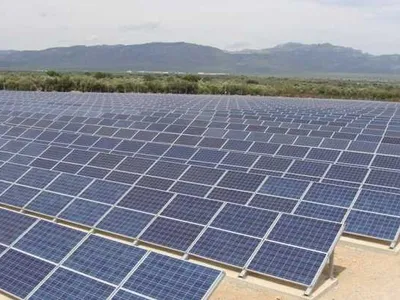
Two Chinese men established a small group of companies operating in the field of renewable energy in Romania. But the Chinese solar parks in Romania are not big business. Zhang Chi owns Enertech Sun SRL, while Gao Jianjun – Euroasia Sun SRL. Most often operating together, the two own a few other companies activating in the field of solar energy. The companies are: Kentax Energy SRL, Reinvest Urziceni SRL, RC Development DVA RO SRL, Nord Solar Doba SRL, Ligovig Sun SRL. Citește și: No social-democrats in power, no success for China The first three manage photovoltaic parks in Bobicești, Olt, and the last two – in Satu Mare county (Doba and Acaș). Financial loss for the Chinese solar parks in Romania In 2018, the last financial year made public by the Ministry of Finance, the revenue cashed in by each of these five companies varies between 1,6 (300.000 euros) and 5,1 million euros (1,1 million euros) and all have losses. However, in 2019, Enertech Sun SRL had revenues of 6,3 million lei (1,4 million euros) and a net profit of 3,7 million lei (800.000 euros), with four employees. The Euroasia Sun SRL partnership gained revenues of less than 160.000 lei in 2018 (35.000 euros) and losses of almost 130.000 lei (less than 30.000 euros).

Smoking is not good for the financial health of China Tobacco
Investigații

Smoking is not good for the financial health of China Tobacco

China Tobacco International Europe Company SRL (registered in Ilfov) is owned by companies registered in China. Which are as follows: China Tobacco Anhui Industrial Corporation (62%), Hongta Tobacco Group Co Ltd (Trust) (25,6%) and China Tobacco Shaanxi Industrial Co. Ltd. (12,3%). Big investment in China Tobacco International Europe Company SRL According to the company’s website, “China Tobacco International Europe Company, hereinafter referred as CTIEC is the only manufacturing plant of China National Tobacco cigarettes in Europe and so far the largest investment project in Romania owned by the Chinese government. In the CTIEC project of foundation from Romania, the Chinese government has invested a capital of about 40 million dollars, of which China National Tobacco holds 97.50% share”. Citește și: No social-democrats in power, no success for China The same source indicates ambitious plans for the Chinese cigarette factory in Romania. “Our Company takes Romania's neighbouring countries, the Middle East, the Balkan countries and North African markets as expanded focus and market base and explores new markets in all areas by drawing upon the experience gained from key points to achieve sequential development. These expansion areas are also gateways for exporting an increasing amount of goods to remote overseas markets in South Eastern and Central Asia, Western Europe, and Southern Africa.” The kings from Buzău Until October 2019, 0.76% of the shares of China Tobacco International Europe Company SRL were owned by Lemnking Industry Com SRL (Buzău). A company which withdrawn from the shareholding of the cigarette manufacturer after going bankrupt. In turn, Lemnking Industry Com SRL is owned by Shanghai F&J Investment and Management Co Ltd and three individuals. The Chinese nationals are connected, in one way or another, to the Chinese group F&J. At the beginning of 2012, Lemnking Industry Com SRL was mentioned by DNA prosecutors in a case very well-known at the time. It was about an extensive network of corruption in the port of Constanța (see details in the article dedicated to Lemnking). The network included a senator and the Secretary General of the Ministry of Interior of that time. The high-profile of the latter was the only thing that kept the Chinese-owned company from being noticed by the media. Furthermore, F&J, the Chinese group owning Lemnking Industry Com SRL, assumes parentship over China Tobacco International Europe Company SRL, as provided by the group’s website. “In 1997, China Tobacco Corporation, Shaanxi Tobacco Company and F&J EUROPE established the joint venture company in Romania. In 2005, the company increased the investment with three million US dollars, The HONGTA Group, China Tobacco Anhui Industrial Corporation joined as the new shareholders also.” Smaller and smaller profits After years of obtaining profit, the fiscal year 2019 was the first year of loss for China Tobacco International Europe Company SRL, as shown by the data of the Ministry of Finance. In year 2017, the company’s net profit was of 9.6 million lei (over 2 million euros), with revenue of almost 77 million lei (almost 17 million euros), with 166 employees. The following year, 2018, the net profit was half of the one gained the previous year – 4.8 million lei (little over 1 million euros), with revenue of 97,6 million lei (almost 22 million euros), with 179 employees. In 2019, the revenue was only 54,3 million lei (over 11 million euros), and the loss was of 7 million lei (1,5 million euros), with 175 employees. Also a relevant indicator, showing that things are not exactly going well for China Tobacco International Europe Company SRL, is debt. In 2017, the debt level was 68 million lei (almost 16 million euros). In 2018, it increased dramatically, to over 121 million lei (almost 27 million euros, with 5 million euros more than that year’s revenue). In 2019 it dropped to almost 97 million lei (20 million euros). Debt and smuggling for China Tobacco International Europe Company SRL Therefore, the company’s future is not bright: CTIEC began 2020 with a 1,5 million euros loss from the previous year, debt amounting to 20 million euros and forecasted revenue of only 11 million euros (if nothing changes compared to 2019). In the recent past, the company has also faced alleged smuggling operations scandals. According to Satu Mare (county located in the North-West of Romania, on the Ukrainian border) media reports, “the Dubliss brand belongs to China National Tobacco Corporation, through the company China Tobacco International Europe Company SRL, registered in Romania. The brand was launched in our country in 2008, being then sold in Russia, and Ukraine respectively. It has been a few years since Dubliss cigarettes with Romanian tax stamp became unavailable in markets in our country. (...) What is interesting is the fact that most (...) Dubliss cigarettes sold in markets in Satu Mare county have Ukrainian tax stamps, a clear indication of the country of origin of those cigarettes.”

How Chinese state money takes over private businesses
Investigații

How Chinese state money takes over private businesses

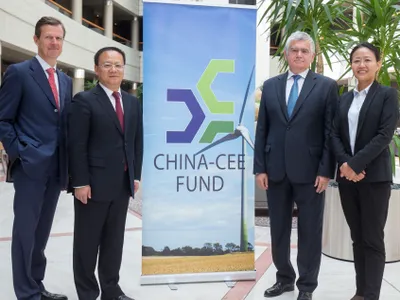
The Chinese investment fund CEE Equity Partners “performed the payment towards Brise Group, one of the largest agribusiness groups in Romania, within the transaction announced in April, for modernizing and developing the grain silos belonging to the Romanian group. Part of the sum (25 million euros) are directed towards the new company established by Brise in partnership with CEE Equity Partners, while the other, 35 million euros, was granted for the targeted investments”, wrote ZF at the end of July 2019. The Competition Council report The newly-established company mentioned by ZF is Bristol Logistics SA. Over 76% of it is currently owned by Rishima Limited, an off shore company in Cyprus. A report issued by the Competition Council in September 2018 shows that Rishima Limited is the Chinese investment fund: Citește și: No social-democrats in power, no success for China “The fund II China CEE acquired direct control over Bristol Logistics S.A. and certain assets from the Brise Group. Bristol Logistics’ main object of activity was storage. This company carried out no commercial activity between 2016 and 2018, and will provide services auxiliary to cereal trading, such as storage, weighing, smoking, drying etc.”. China Exim Bank in the Chinese investment fund CEE Equity Partners In the same document, the Chinese investment fund CEE Equity Partners is mentioned. The Competition Council also showed that “Funds I and II China CEE are investment funds, controlled by the Export-Import Bank of China (the China Exim Bank)”. And also that “Fund I China CEE operates on the Romanian marked through Flash Lighting Services S.A., company acquired in year 2018. The company’s main object of activity is represented by electrical installation works. It carries out activities such as designing and implementing energy efficient lighting solutions in Romania”. The two economic operations are mentioned by the Competition Council in a discussion regarding the China CEE Group acquiring, through Gardenica Limited (“wholly owned by China Central and Eastern Europe Investment Co-operation fund II SCS SICAV-SIF (...) hereinafter referred to as the II China CEE Fund”), Pasteur – Filiala Filipești SRL, Farmavet SA etc. (see dedicated article).

Contract almost awarded to CCC by social-democrats, procedure cancelled by liberals
Investigații

Contract almost awarded to CCC by social-democrats, procedure cancelled by liberals

Contract almost awarded to CCC: the fate of an infrastructure project worth 1,36 billion euros, carried out by a Chinese company (in partnership with a Turkish one), was decided by a motion of no confidence. On October 10th, 2019, the government led by Viorica Dăncilă was dismissed through the vote of Romanian parliamentarians. Three days later, on October 13th, the Minister for Transport of that government (in office until the investiture of the new government), Răzvan Cuc, announced that the signing of the contract was a mere formality. Comarnic - Brașov highway, contract almost awarded to CCC He was referring to the project of the Comarnic – Brașov highway, which the Dăncilă government decided to carry out in a public-private partnership. Following the procedure for selecting the private partner, the winner was deemed to be the consortium formed by China Communications Construction Company Ltd (China) and Makyol Insaat Sanayi Turizm (Turkey). Also read: No social-democrats in power, no success for China “Next week I am submitting the contract so it can be signed by the National Commission for Strategy and Prognosis (authority appointed to complete formalities – n.n.). The Contract must be approved by a Government decision. Should we (the Dăncilă government – n.n.), be able to pass it, we will, if not, we will lay it out for the next Government”, said Minister Cuc three days after the dismissal of the cabinet he was a part of. Dăncilă out, Orban in However, the Government Decision was not passed by Prime Minister Viorica Dăncilă so the contract was almost awarded to CCC. After his investiture, the new Prime Minister Ludovic Orban, made a foreseeable move (given the objections raised by the opposition of the Dăncilă government with regard to the choice of a public-private partnership for the project, instead of accessing European funds for large infrastructure projects): he cancelled the entire procedure and decided that the project would be funded from European funds. According to a document drafted by the new government, the project would be financed by LIOP European funds (Large Infrastructure Operational Programme) and would cost 1.2 billion euros (VAT included). According to the document quoted, in this scenario the 52 kilometres of mountain highway would be completed within 5 to 6 years (2025 – 2026). For the time being no procedure for appointing the constructions was initiated.

Romania: no social-democrats in power, no success for China
Investigații

Romania: no social-democrats in power, no success for China

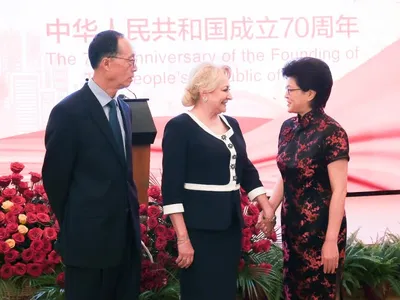
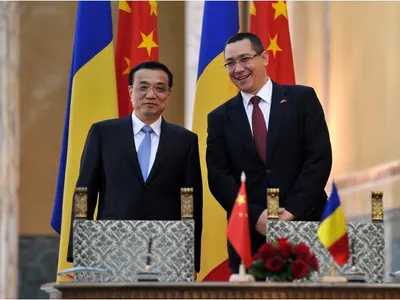
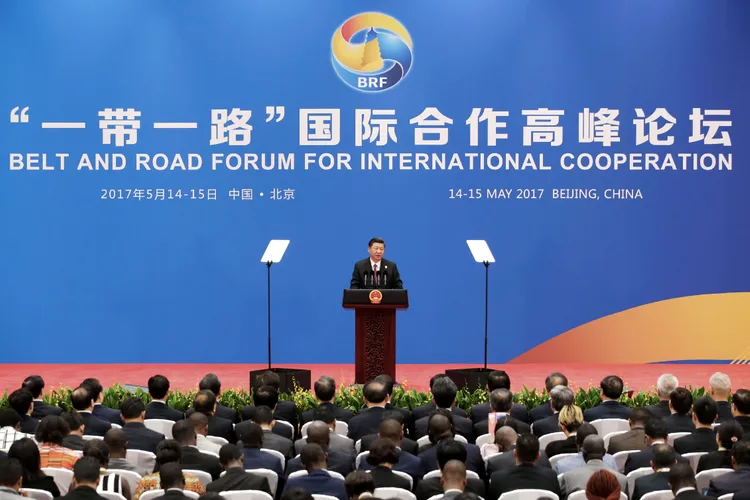
The close relations with China were established during Romania’s communist period (1945 – 1989). As would be expected from an ideological point of view, the successor of the Romanian Communist Party, namely today’s Social Democratic Party, has been more sensible to the connection with the great Asian power than the politicians in Bucharest with other ideological orientations. Iliescu & Năstase The first wave of Chinese business came over the young Romanian capitalism in the '90, when Romania was led by Ion Iliescu, a former member of the Romanian Communist Party led by Nicolae Ceaușescu until his execution, in December 1989. During the Prime Minister mandate of the social democrat Adrian Năstase, he also benefited personally of the commercial advantages offered by China: a criminal file on Năstase’s name mentions that he bought impressive quantities of goods from China, with money without any legal justification, including a life-size ceramic horse. However, the next Prime Minister imposed by PSD, Victor Ponta, was the most active in promoting Chinese economic interests: he promised he would cede reactors 3 and 4 of the nuclear power plant in Cernavodă to Chinese state company, he concluded a memorandum through which Huawei would have participated in strategic public projects in the field of communications, and he generally promised he would fully open Romania’s economy to opportunities coming from Beijing. Ponta in China Visiting Beijing in 2013, at the invitation of his Chinese counterpart, Li Keqiang, Ponta requested the conclusion of a strategic partnership with China: “We proposed, during our meetings with the president and the prime minister, elevating the relationship between Romania and China to the highest level Romania has, namely that of Strategic partnership. There are a few countries we have strategic partnership with, and we would like – next year we will celebrate 65 years of diplomatic relations – to have a strategic partnership with China. Such a strategic partnership includes several fields, from political collaboration, to, obviously, economic collaboration, which is of great importance, but also in the fields of culture, education and others. (...) The president and the prime minister said they greatly appreciate this proposal, that they have a very good opinion on it, and that, obviously, we will enter the analyse procedure, a standard diplomatic procedure necessary for its completion”. This proposal caused uproar both in Bucharest and in western chancelleries, as Romania had a strategic partnership with the USA and was a NATO member. Dăncilă's advisers Another social-democrat prime minister who stimulated Romanian-Chinese economic relations was Viorica Dăncilă (2018 – 2019). Considered the puppet of the former PSD leader Liviu Dragnea, without any real political power, Dăncilă was advised and controlled by councillors very close to China. According to the media in Bucharest, one of them, Florea Voinea, had met the current Chinese Prime Minister Li Keqiang when they were both members of the Communist Youth (of Romania and China, respectively). In an interview with Radio România Internațional, the Chinese department, Voinea expressed his full admiration for China: “If you go and visit Shenzhen, with Huawei and ZTE, and see what they’ve done there… their nuclear power plant, how many groups operate there… They’ve built new cities, you wouldn’t believe there are such constructions on Earth (…) I am puzzled as to why we haven’t continued our collaboration with China, why we don’t collaborate with them and carry out projects with them. I confess that Zhang Gaoli said, 4-5 years ago, that for them it wouldn’t be a problem to support Romania’s development, that they can offer us loans even without government guarantees and that we can pay with anything. I confess I really can’t begin to comprehend how you could have such an offer and fail to capitalize it”. NATO, the game changer However, the relevant events occurring internationally in the second half of 2019 blocked the momentum gained by strategic Chinese business in Romania. After a meeting in Washington in August 2019, between Romanian president, Klaus Iohannis, and the American president, Donald Trump, the White House published a joint statement showing that the two countries “seek to avoid the security risks that accompany Chinese investment in 5G telecommunications networks”. Following the agreement concluded in Washington, a memorandum hindering the access of Huawei in the construction of the 5G network in Romania was signed. In December 2019, after a NATO summit in London, the final statement included a fragment highlighting an ambivalent relationship between the Alliance and China: “We recognise that China’s growing influence and international policies present both opportunities and challenges that we need to address together as an Alliance”. In November 2019, Ludovic Orban, president of the National Liberal Party, the same party that supported Klaus Iohannis in winning his second mandate as president, became Prime Minister. For Nicolae Vasilescu, President of the Romania-China Chamber of Commerce and Industry, these political moves were a disaster. “All strategic investments with China were stopped by the PNL government”, declared Vasilescu, for the project “The Chinese belt around the Black Sea”, referring to reactors 3 and 4 in Cernavoda, the Comarnic – Brașov highway and the auction for the 5G network. More propaganda, less money President of the Chamber of Commerce and Industry of Romania, Mihai Daraban, seems to confirm that, without the realization of these mammoth investments, Chinese influence on the Romanian economy is diminished. “I keep seeing, in the public space, a multitude of Chinese delegations coming to Romania. Every colleague of mine, from every county, has received tens if not hundreds of Chinese delegates over the years, but unfortunately, although we would have great expectations from them, China is under the one hundred million euros mark of direct investment in Romania. It is true, in the media they are very active, very present. Even our officials are sometimes travelling more frequently in China than in the United States, but this is reality, China has less than one hundred million (euros directly invested in Romania)”, said Daraban in October 2019. According to the revenues gained in the fiscal year 2018, the most important Chinese companies in Romania are: COFCO (3.9 billion lei - 900 million euros), Pirelli Tyres Romania (2.6 billion lei - 578 million euros), Huawei (1.9 billion lei - 420 million euros), Smithfield and the companies it owns (1.5 billion lei - 333 million euros), Eurosport DHS and the companies it owns (440 million lei - 100 million euros), NBHX Rolem (375 million lei - 83 million euros), COSCO (210 million lei - 47 million euros) and Honest General Trade (202 million lei - 45 million euros).

DeFapt.ro
Investigații jurnalistice, analize, știri la zi
Abonează-te
DeFapt.ro

Ultima oră

Ultima oră